I
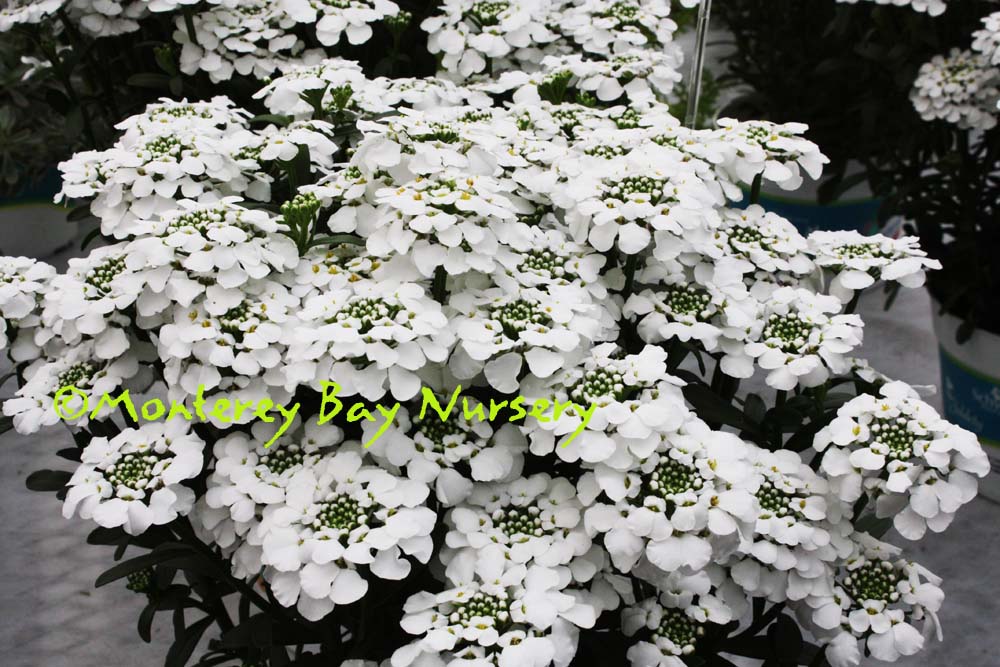
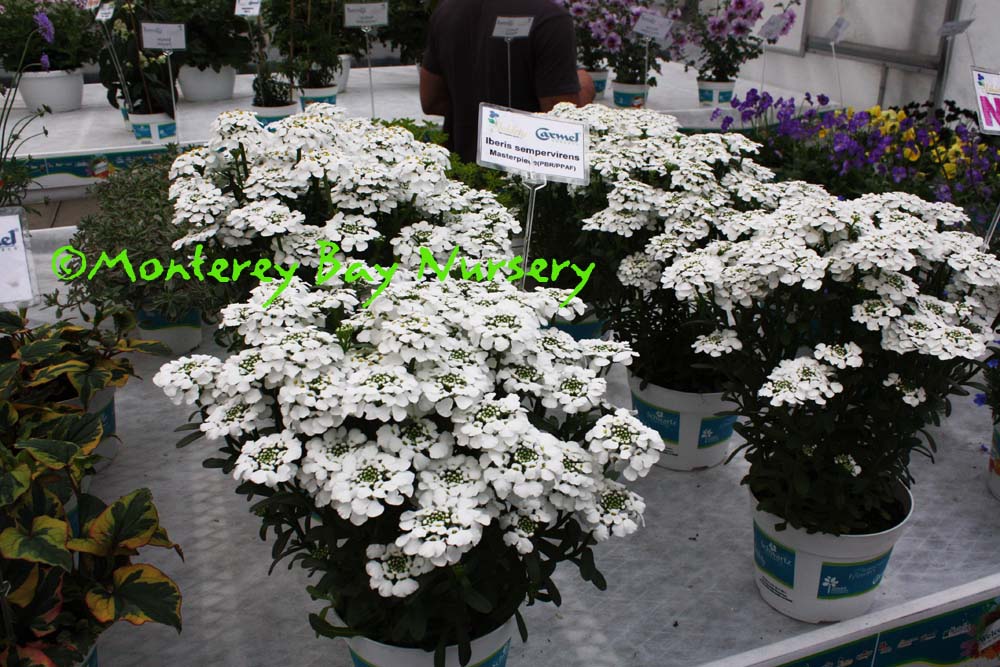
Iberis sempervirens 'Masterpiece' (not currently in production) CANDYTUFT outrageous flowers Pack Trials flower power stupendously large, luscious, bright white flowers just keep on blooming. In cool weather the young buds in the center are tinted amethyst. These flowers and clusters are at least twice as large as normal, of very heavy substance, and are noticeably more heavily produced than on the typical species. Even the leaves are larger and more leathery. Evergreen and shrubby, it is easy to grow in sun or part shade. To about 12" tall and 2-3' wide. This will grow in less than perfect soil, as a groundcover, low shrub, or a mass of color. This particular form makes a great container plant, partly because of vigor and reliability and partly because of its almost everblooming tendency. Average watering, Sunset zones 1-24/USDA 4. Cruciferae/Brassicaceae. rev 11/2011
Impatiens tender
to relatively hardy herbaceous annuals, perennials and soft
shrubs. Widely distributed through the Northern Hemispheric and
equatorial Tropics such as Africa, Java etc. Balsaminaceae. rev
9/2018
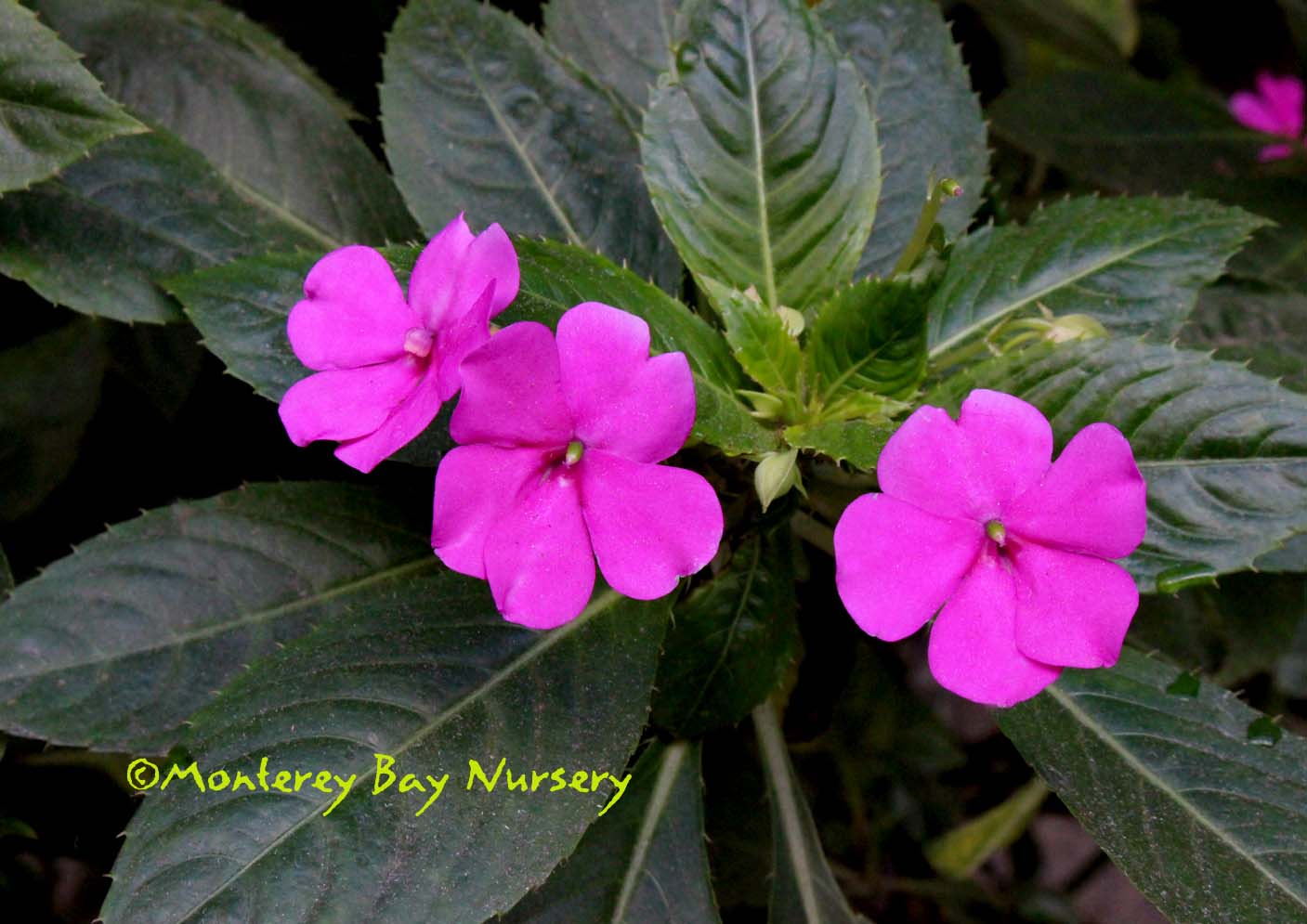
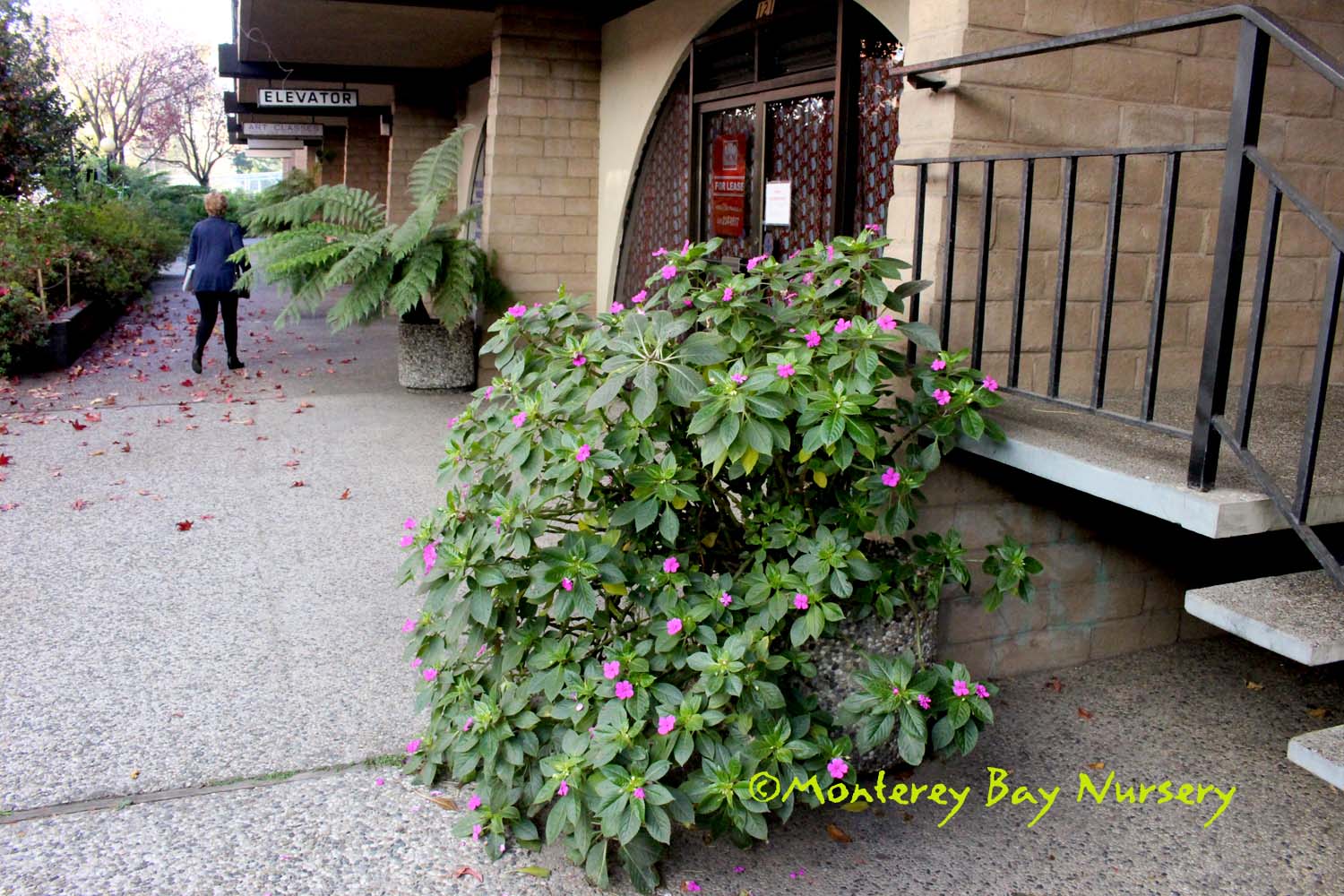
'Central Coast Rose' strong color Galleria Shopping Center, downtown Santa Cruz this is a wonderful, reliable, persistent landscape and garden color shrub if you site it with some protection. It gets about 3-4' tall and wide, displays wonderful dark green, glossy leaves and glorious deep magenta purple flowers. It blooms over a long season, notably through winter when I. sodenii (oliveri) varieties have stalled. It is seedless as far as we've seen. It shows clear signs of carrying some virus, viroid or similar agent, the symptoms of which are leaves yellowing and developing unevenly and slow growth under cold or underfed conditions. When happy you won't notice any problem. Whatever the agent is it certainly helps restrain vigor under good growing conditions. The Kartuz Greenhouses website states it is tetraploid and has been "a pass-a-long [sic] plant for decades between neighbors in Southern California" which would best explain the apparent resident virus. If anyone knows more about this beautiful, interesting and useful mystery plant we'd like to hear from you! I have seen it used mostly as a container plant in commercial landscapes here in the Santa Cruz area, where local talent Don Genese features it whenever he can. Grow in part sun to full shade, rich, light soils, average watering to regular watering, and feed intermittently to maintain good color and vigor. Two sources report it is hardy to 25F, I show "show me first" - until then 30F/USDA zone 9. rev 9/2018
irvingi (not currently in production) intense flowers one of the frost-hardy species, going completely dormant under cold conditions but able to survive in the ground in Bay Area gardens. The dark green, pointy leaves host nice sized, briilliant magents pink flowers until frost. Growing about 2' tall and wide, it can be a shrub or container subject. Mix with coleus, ferns, or other shade lovers, it burns in any amount of direct, hot sun. Average watering, rich soils. Perennial in Sunset zones 16-24/USDA 9. rev 5/2013
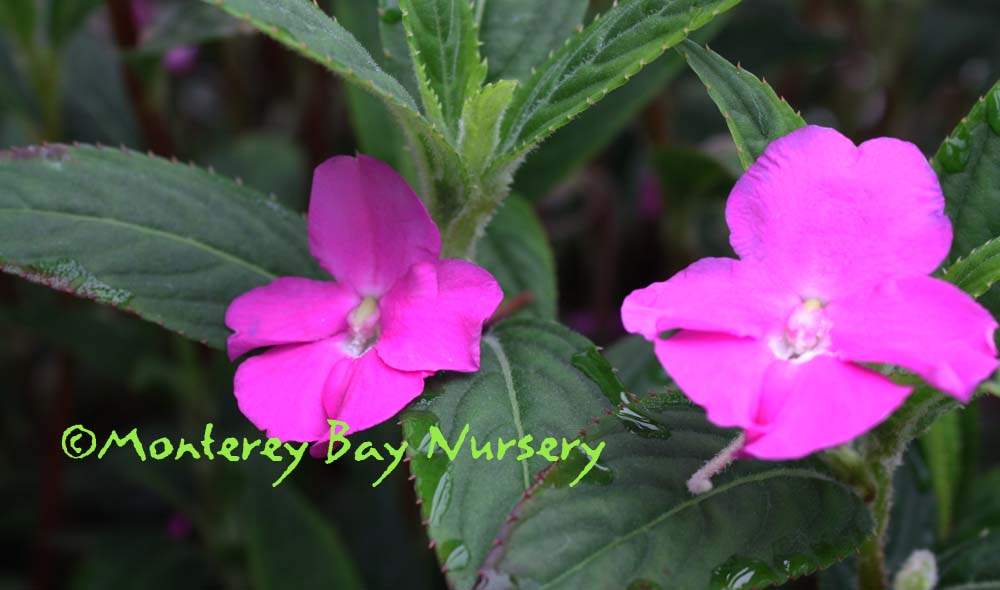
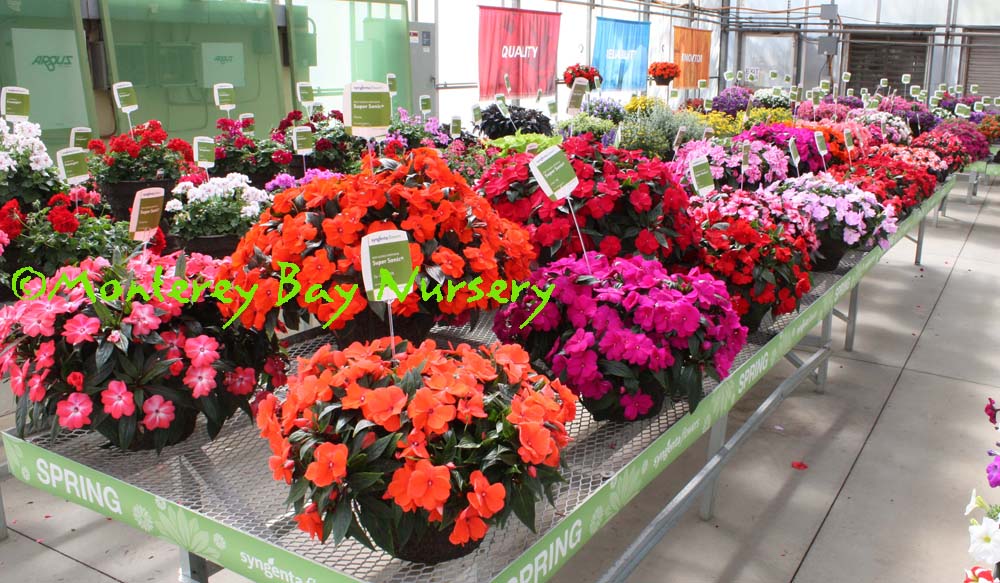
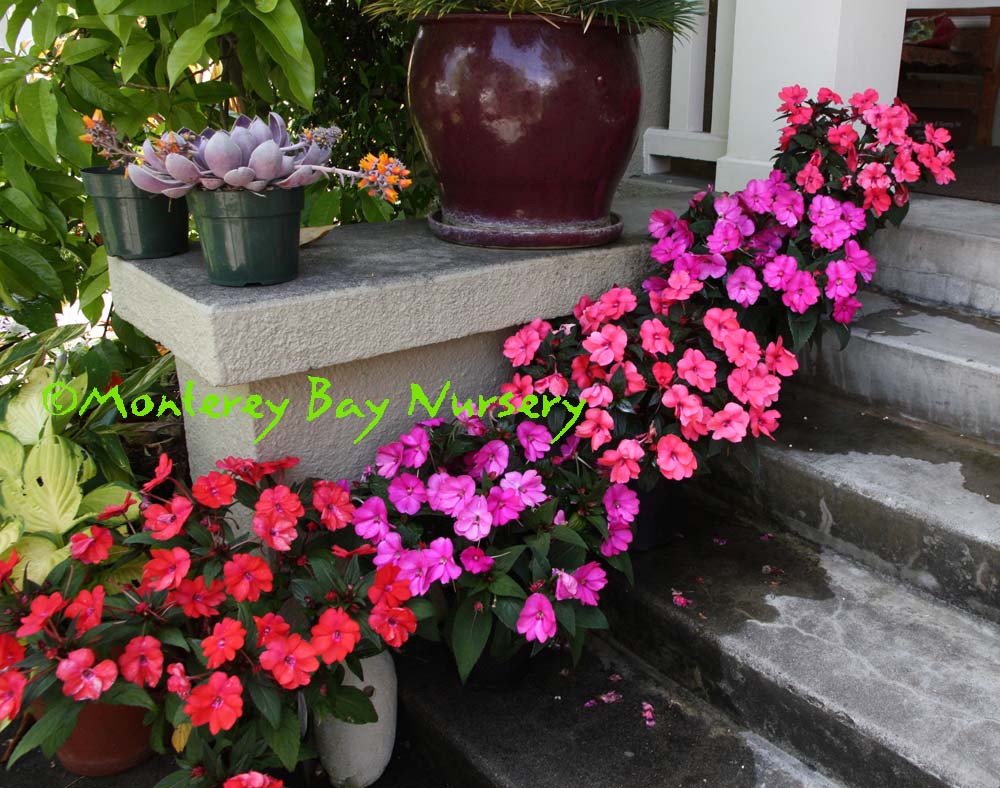
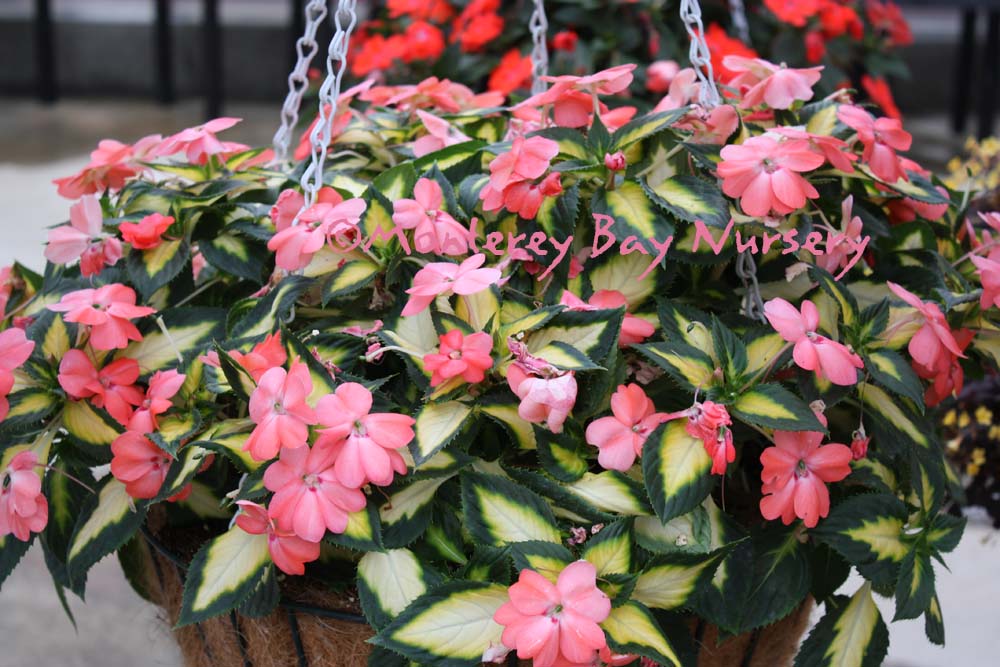
New Guinea Impatiens (not currently in production) Spring Trials Molly's plants a series of hybrids developed during the 1980's from species native to Indonesia, New Guinea and Java in particular, and mostly from the latter island. They are resistant to downy mildew, are larger, often taller, more vigorous, more sun tolerant and with stronger, more wind-tolerant stems. rev 9/2014
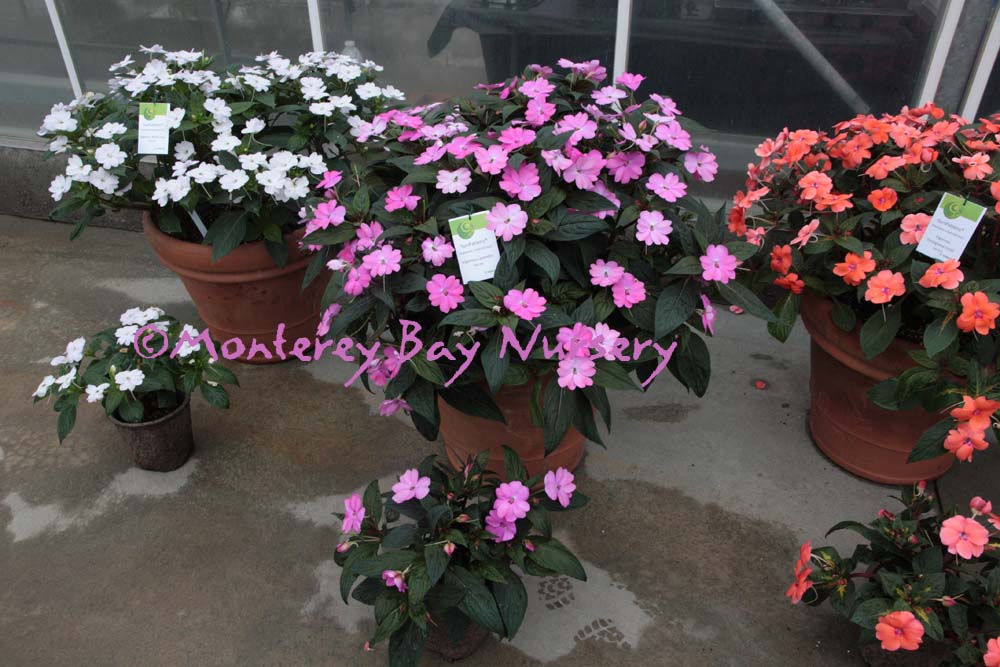
'Sunpatiens' (not currently in production) vigorous lavender colored foliage this series represents a welcome return to the bigger, bolder, more durable New Guineas of the previous age, the ones that were big and bold and showy and a little extroverted. These feature larger, more durable flowers on much more vigorous, substantially more disease resistant plants that provide knockout flower and foliage color until frost. They will take full as long as they don't dry out, and are easiest if established before burning heat. They are easier in the drier air of Western climate zones in a partly sunny location, where they actually do like a breather between waterings. There are compact, vigorous, and spreading varieties. All grow at least 12" tall (or more!) and are wider in the garden than in containers. Garden size for compact ones = 24-36" tall and wide; vigorous and spreading varieties = 3-4' tall and wide. They fill out a hanging basket very nicely. Sunset zone 24/USDA 11. rev 5/2011
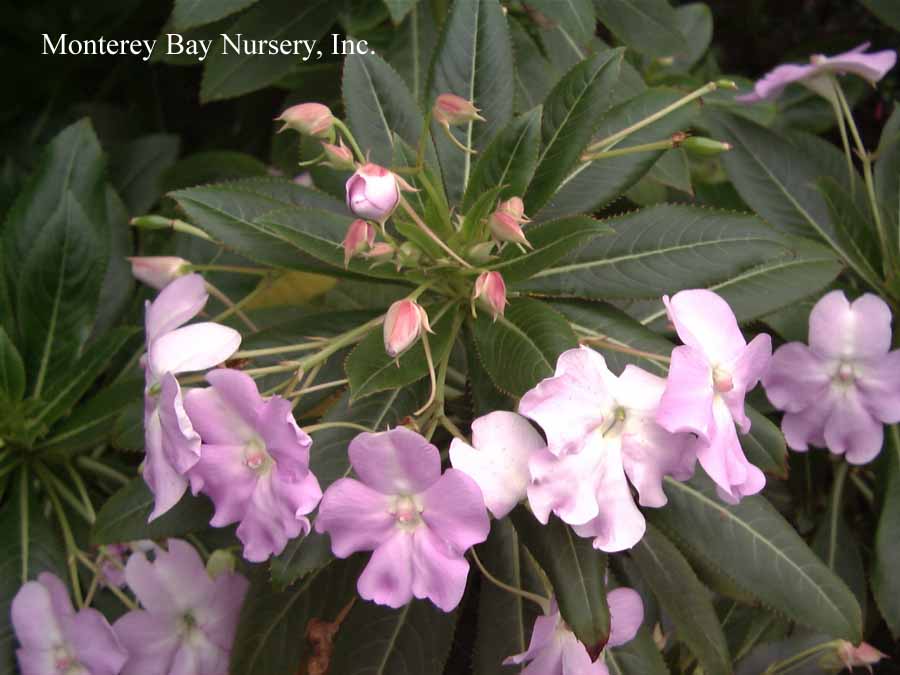
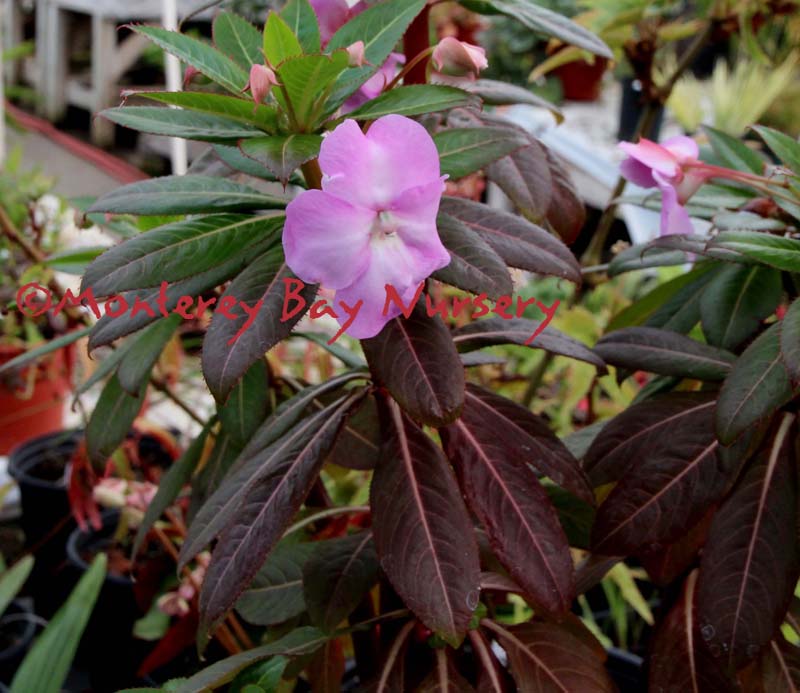
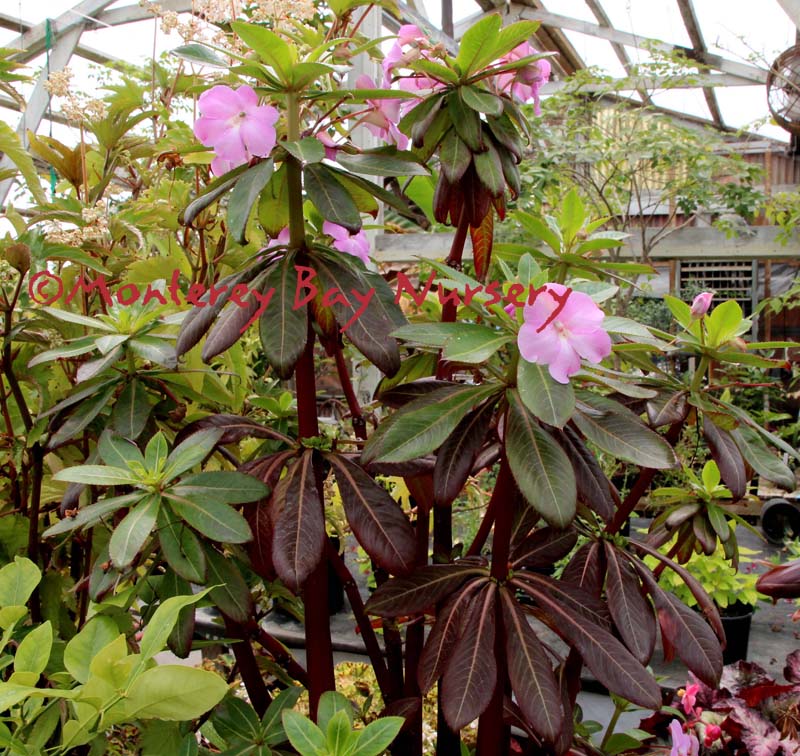
sodenii (oliveri) POOR MAN’S RHODODENDRON closeup habit a tender evergreen shrub to 5-6’ tall and wide, can be a "deciduous" perennial in areas of hard frosts if the crown doesn't freeze. It doesn't seem to persist in most areas where the plant freezes all the way to the ground every winter. Large (to 2") pale lavender pink flowers are produced almost all year, with stronger coloration in cool weather. Attractive, dramatic foliage is glossy dark green, rather formal unless damaged, often with a distinct bluish cast in full shade situations. Part sun to shade, average watering, but actually somewhat drought tolerant due to its succulent stems. This is also a very good choice for narrow situations, since its primary habit is vertical, and any stems tending sideways can simply be pruned off. Also good in containers. Sunset zones 16-17, 21-24/USDA zone 9a or as a patio/house plant anywhere. Eastern Tropical Africa. Balsaminaceae. rev 9/2012
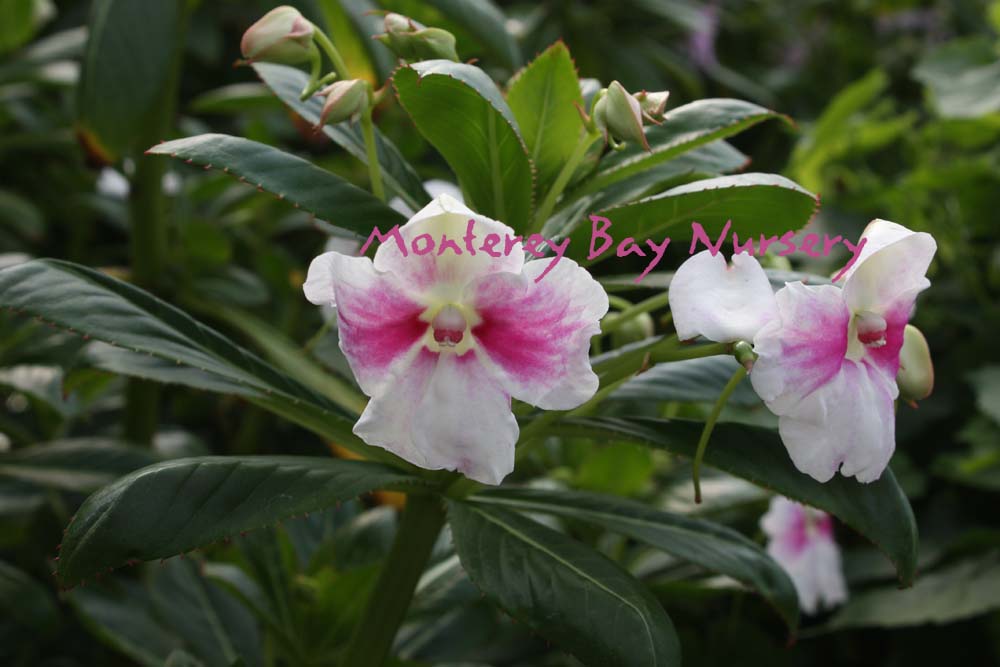
'La
Vida Rosa' very pretty!
brushed
with
a swathe of rosy pink across the face of the white flower. A
large, easy care shrub for bright shade or morning sun. The
foliage is nice on its own, a dark blue green and very
attractively shiny and tropical. Same specifcations as typical
form, to about 3-5' tall and wide. rev
9/2012
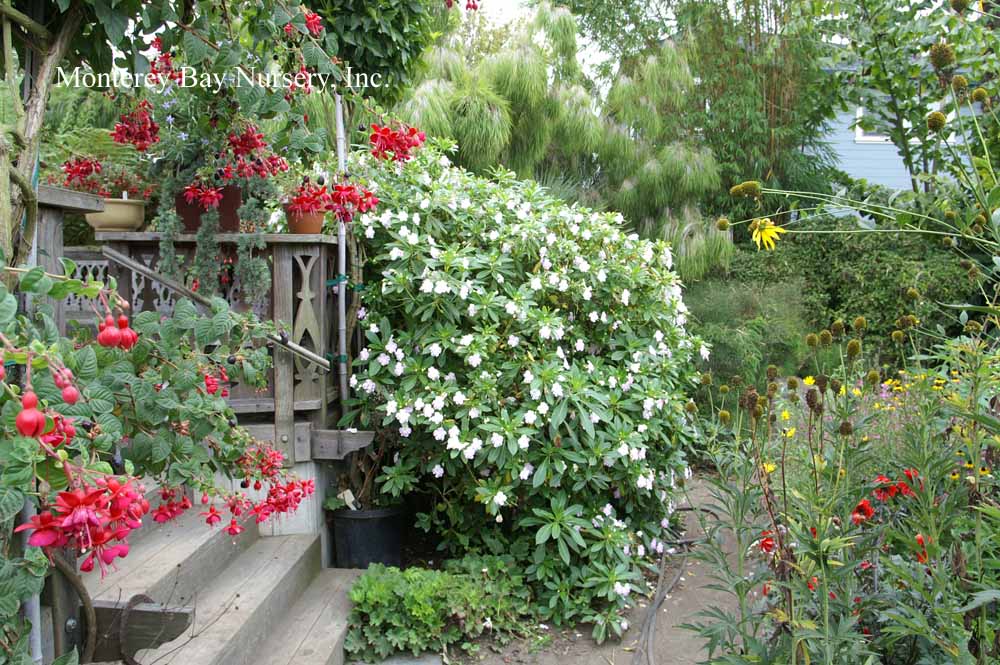
'Madonna' heavenly white flowers
a pure-white flowering selection of the rightly beloved
Poor Man's Rhododendron. For that Moon Garden you keep wanting to
do! A dramatic foliage plant as well. Just like the original
for size/culture, to 5-6' tall, 3-4' across. rev 9/2012
'Robert the Red'
see
why? whole
young stock plant this is a great
intoduction given to us by Mr. Impatiens, Derek
Pittman. I just thought that monniker up for writing
this description and then when I checked online to
confirm spelling, guess what? You wanna guess who
owns mrimpatiens.com?? This is maybe the best
"oliveri" (as we usually still call it) out there.
Dark and handsome with dark reddish stems and
green new leaves that make the pink (warm
conditions) to deep rose magenta (cool to cold)
flowers pop out even more. Also with cool weather
the foliage becomes very dark burgundy red to match
the stems, and it just sparkles when moist with rain
or mist. To the usual 4-5' tall, bushy, typical
habit. Part sun (better color) or full shade,
average watering but surprisingly drought tolerant
when established. Blooms till frost knocks him to
the ground, but ol' Bob bounces back again in
spring. Sunset zones 15-17, 21-24/USDA 9. rev
7/2013
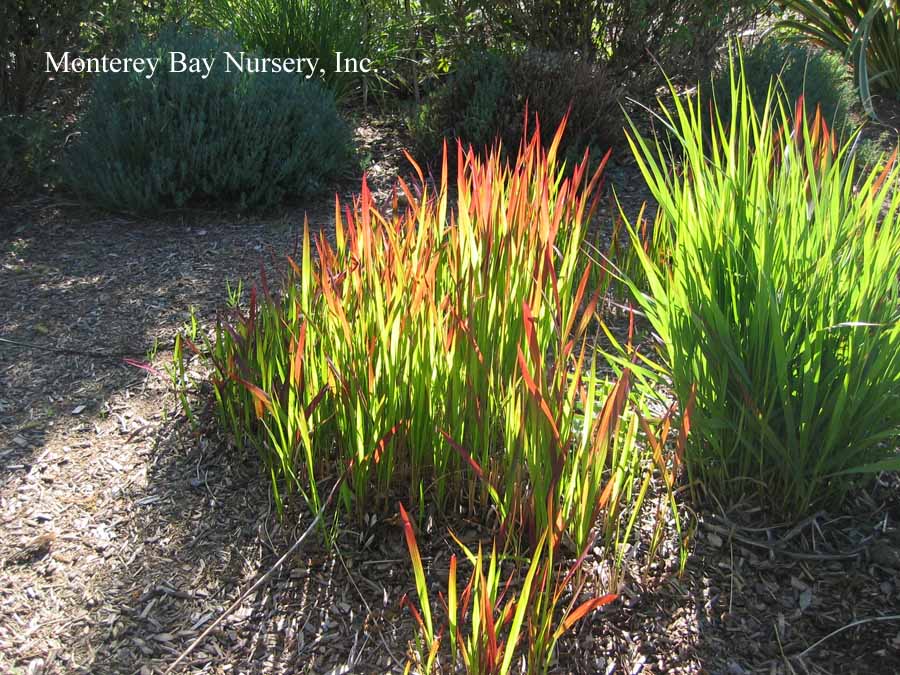
Imperata cylindrica ‘Rubra’ BLOODGRASS habit backlit a deciduous grass to 2’ tall with thin, striking dark red blades. Color is best in full sun, and it looks fabulous backlit. Spreads slowly by stolons, although in more strongly seasonal climates this or a related form can be dangerously invasive in wet habitats in more northerly latitudes. Average to occasional summer watering, slow in cool summer climates, frost hardy. Japan. Graminae/Poaceae. rev 5/2010
Ipomoea MORNING GLORY, SWEET POTATO, YAM vining perennials and annuals, some forming edible roots, many with very showy, trumpet-shaped flowers. Convolvulaceae. rev 8/2015
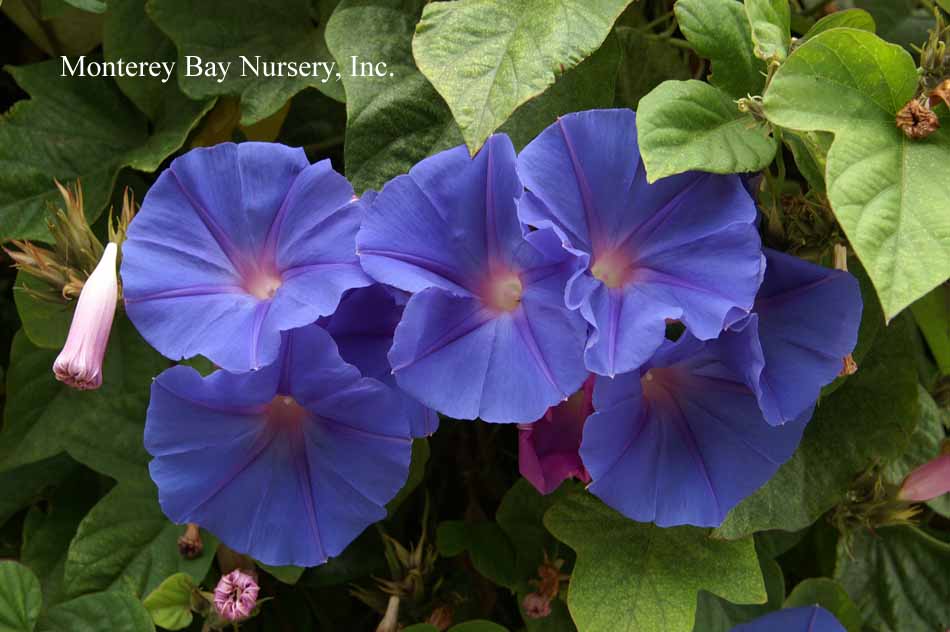
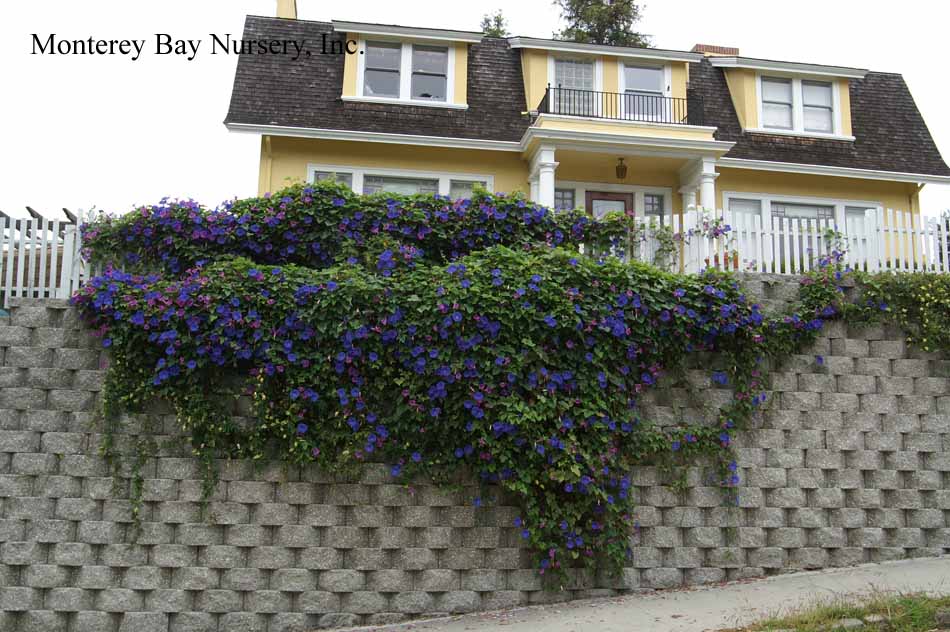
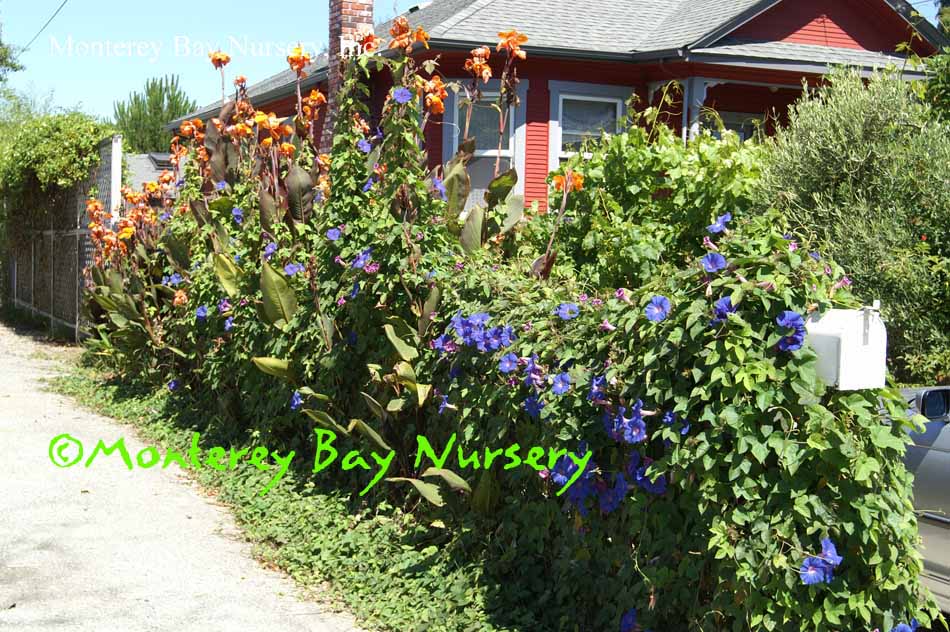
acuminata BLUE
DAWN FLOWER closeup
Berkeley Way
with orange
cannas a fast evergreen vine or groundcover,
usually deciduous with frost. It bears dark blue morning glory
flowers to 3" across, aging to rosy mauve by afternoon, from late
spring through fall. Sun, little or no summer watering. Regrows
after a hard frost if the crowns are not frozen. This is one of
the best and most noticeable flowering vines for warm
Mediterranean to subtropical or tropical climates. It needs room,
and can cover more than you want it to, but those blue, blue
flowers are so rewarding and it combines so well with other
subtropicals such as Plumbago and Bougainvillea. It can also
survive on little summer watering. Tropical America.
Convolvulaceae. rev 5/2010
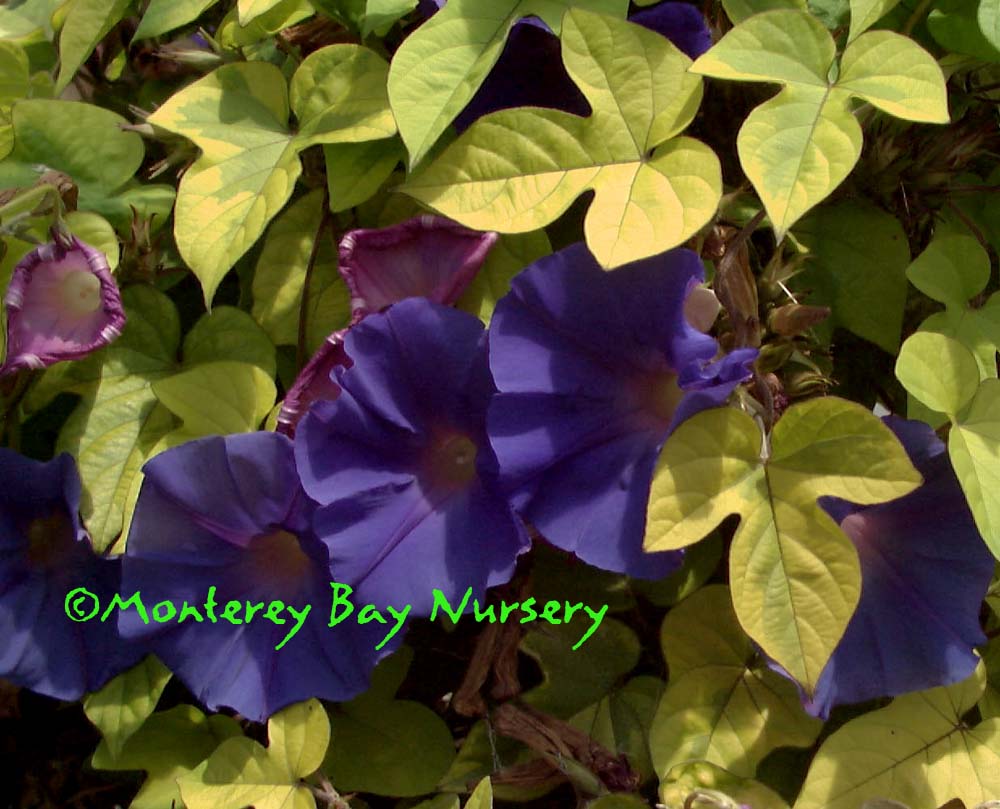
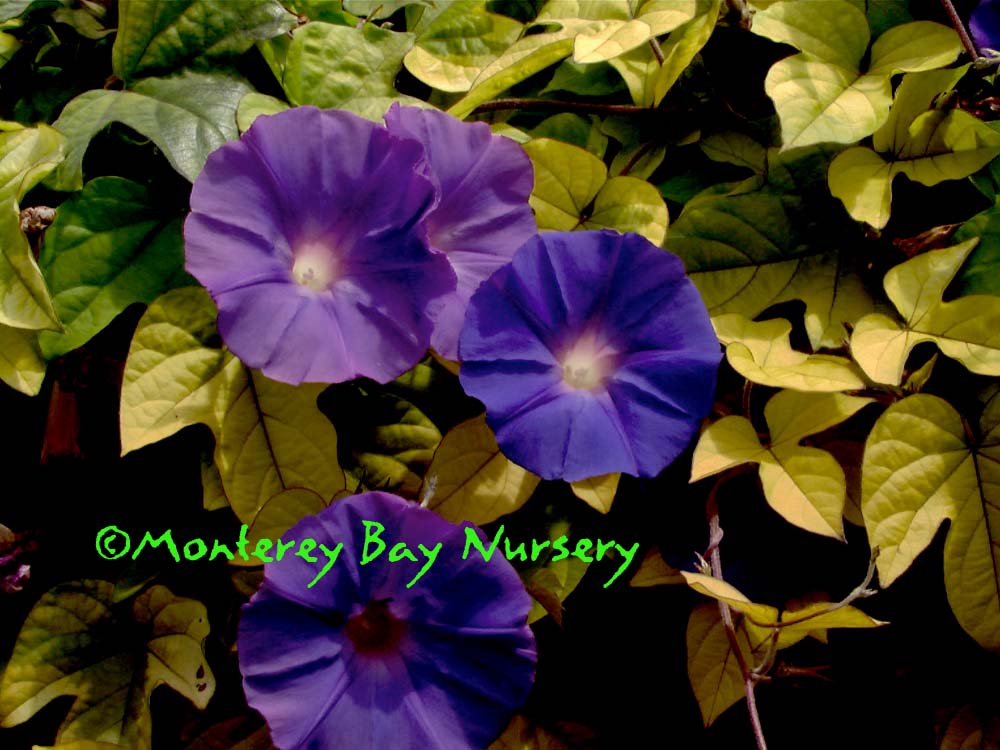
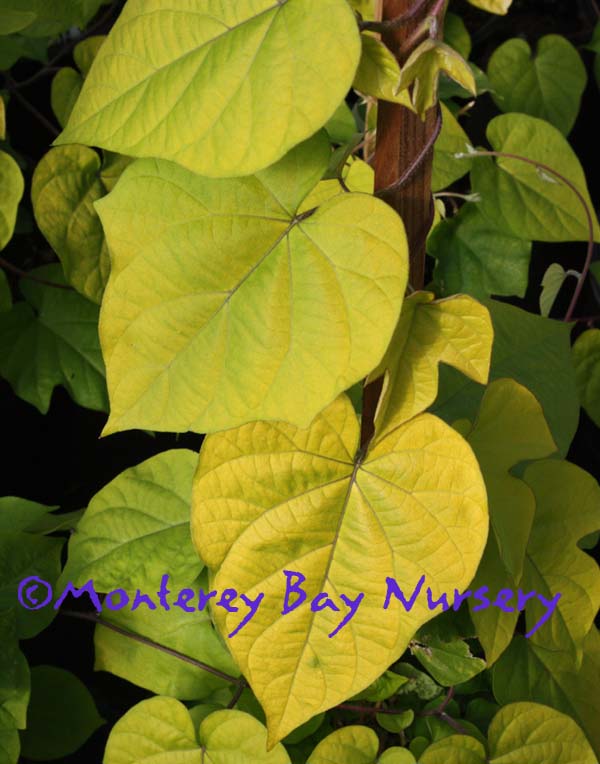
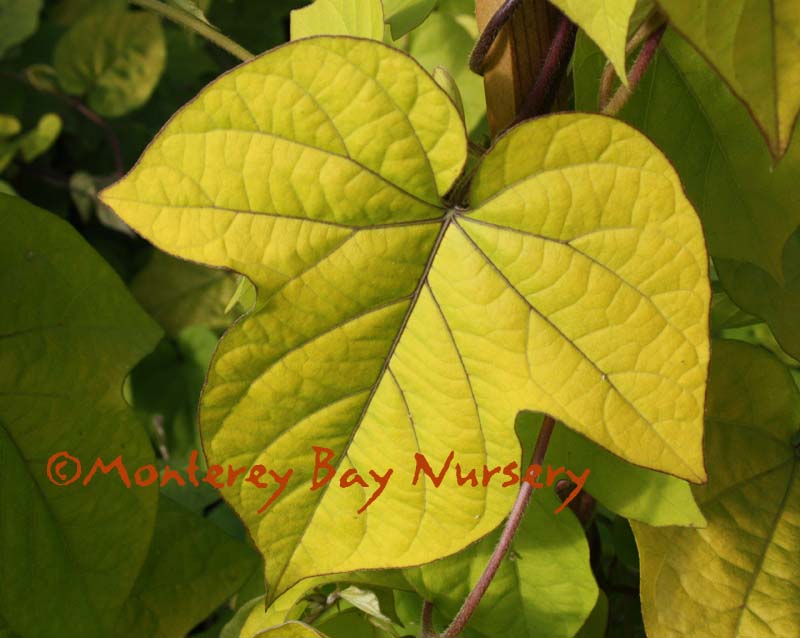
'Daybreak'
part shade,
midsummer another juvenile leaves
mature
(flowering) foliage finally, the incredible,
spectacular, golden-foliaged version of the peerless, perennial
Blue Dawn Morning Glory, with the gold and blue colors inspiring a
name from the iconic
Maxfield Parrish painting. Spring, summer and fall leaves
are deep golden yellow to bright lemon in full or mostly full
sun, often with a broad light margin, and variably shaded
deep gold from slight leaf-surface shadings. They form a
stunning backdrop for the large, flaring, Parrish
Blue to dark purple blue flowers, which age to pale violet
purple by late afternoon. In half sun or bright shade leaves are
warm chartreuse during the growing season, then in winter, or if
well-shaded at any season, leaves are chartreuse to normal green.
This form doesn't seem to lack vigor, but it stands to reason it
must. Grow this most special variety in at least half direct
sun or more. Usually very little or no watering is needed when
established. Mature second-year and older plants can survive
25-20F by resprouting from the roots. rev 10/2016 MBN INTRODUCTION-2016
batatas
SWEET POTATO Columbus,
Ohio Spring
Trials rare
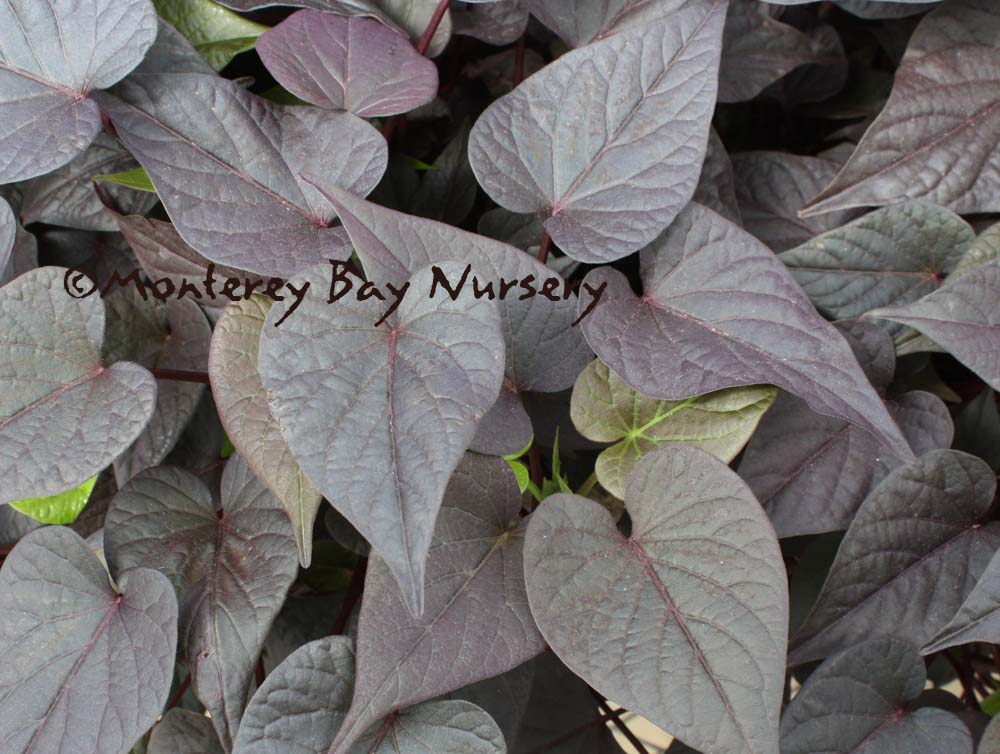
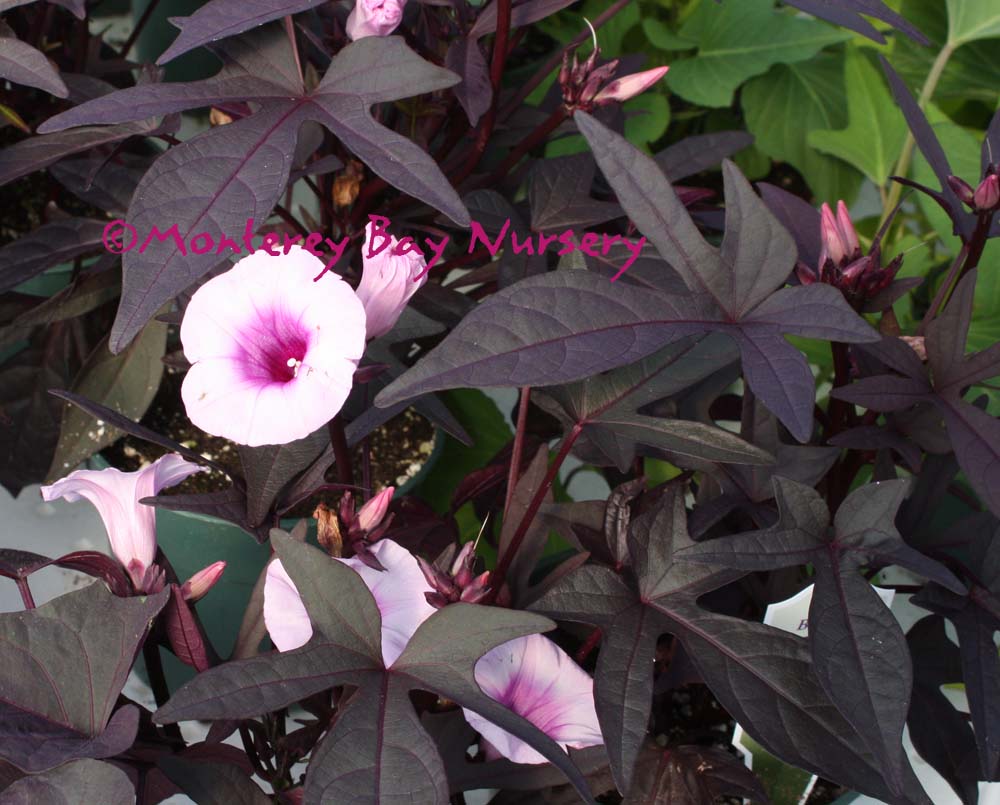
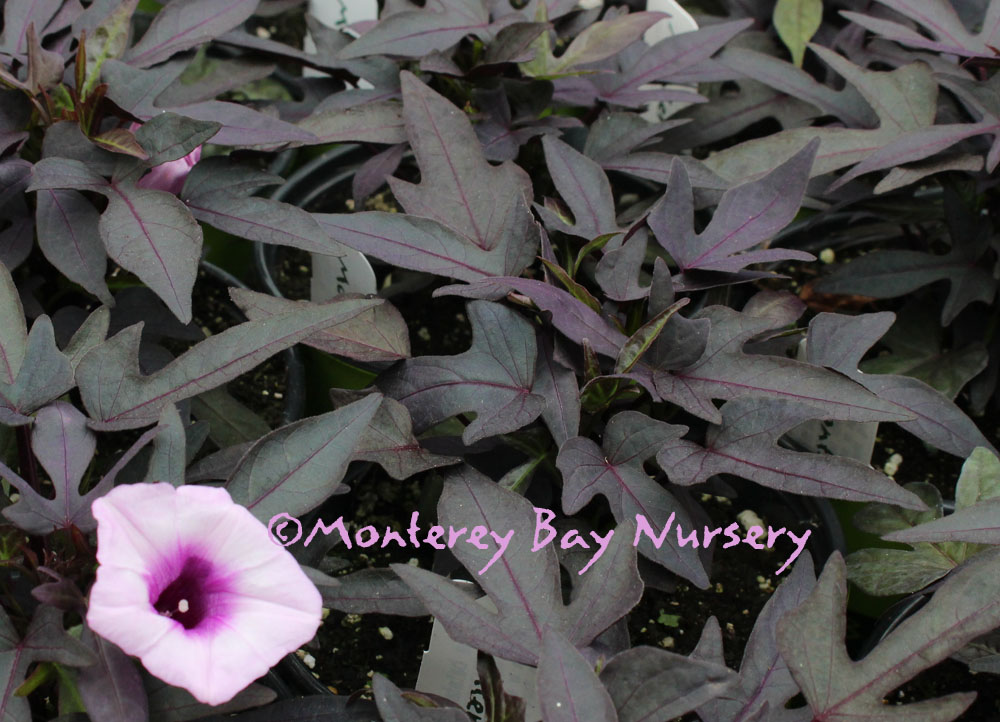
flower tropical and subtropical vines, emerging
from large, starchy, edible roots. Perennial, but often fail to
resprout after cold years, and sometime rotting out in cold, wet
soils. Selected for foliage color and used as color/texture plants
in baskets and containers. rev 8/2015
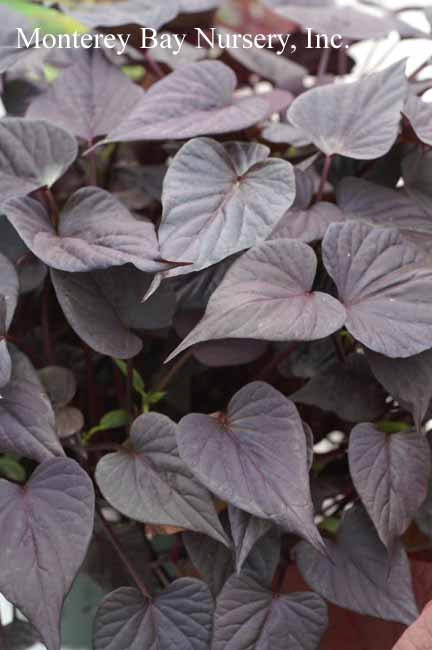
'Ace of Spades' (not currently in production) black-green, heart-shaped. rev 7/2017
'Blackheart' (not currently in production) black-green, heart-shaped. rev 7/2017
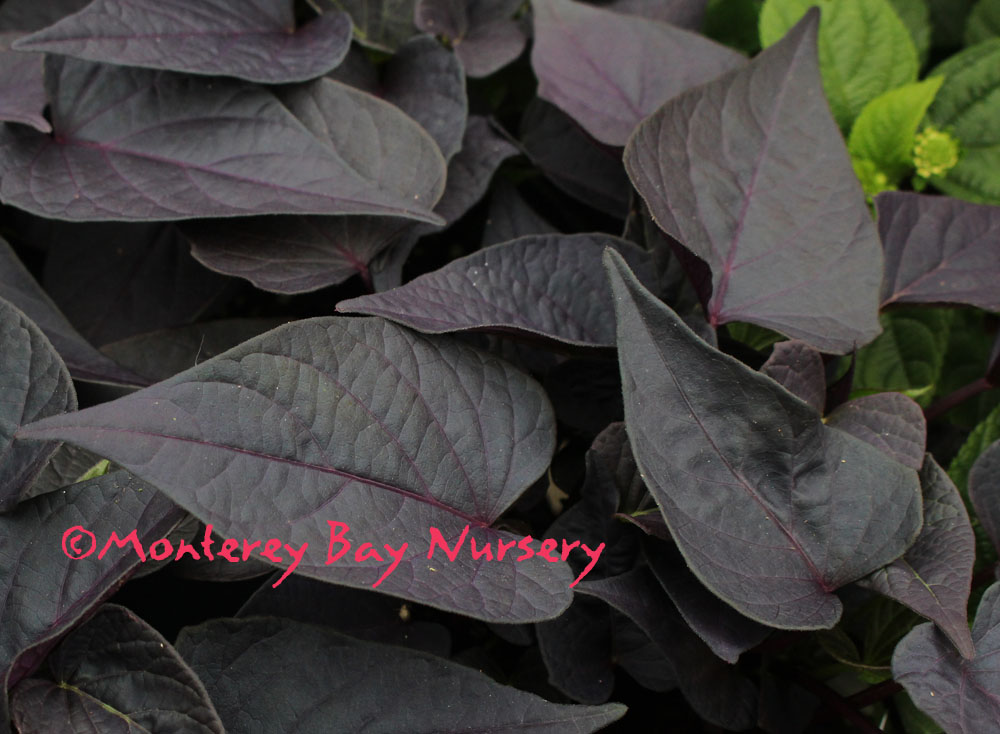
'Blackie' (not currently in production) black-green, divided leaf, flowers not uncommon. rev 7/2017
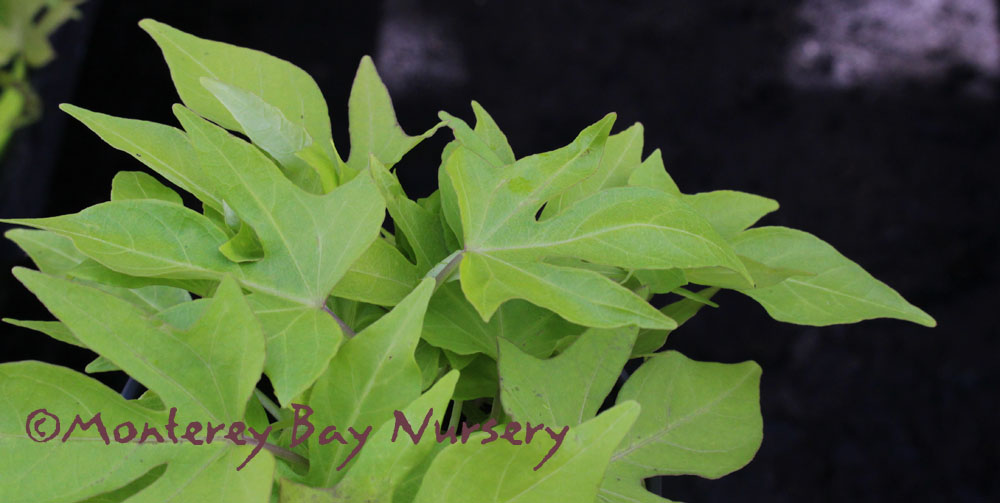
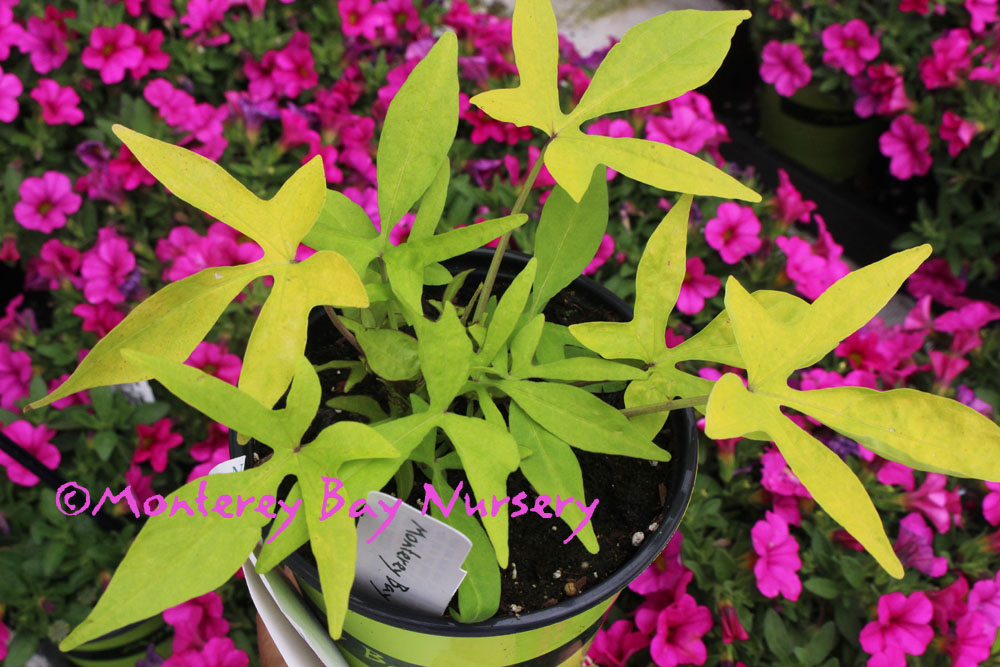
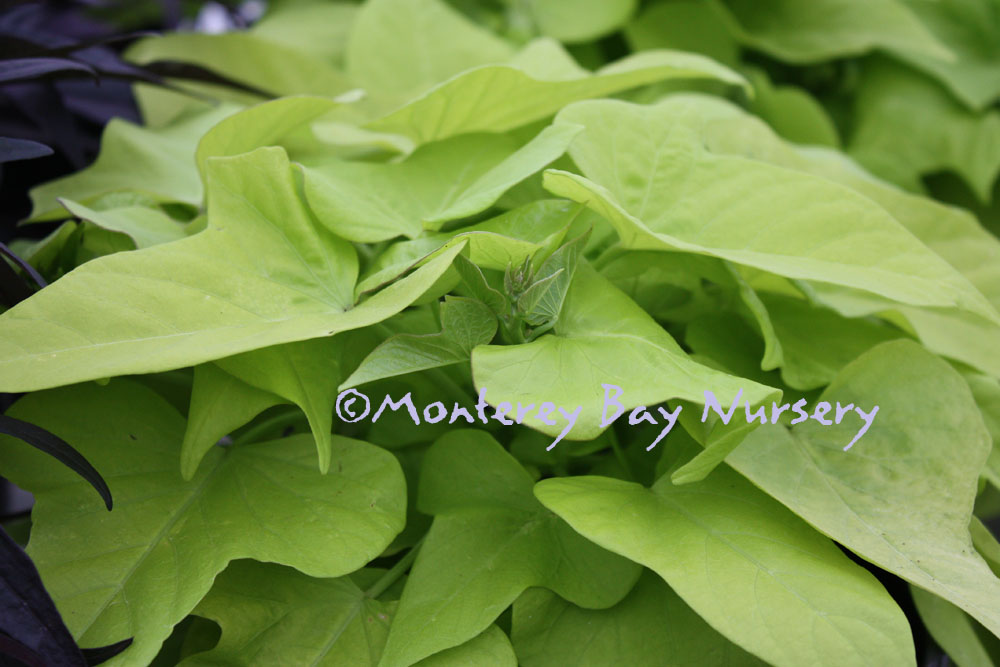
'Bright Idea Lime' (not currently in production) bright lime green, divided leaf. rev 7/2017
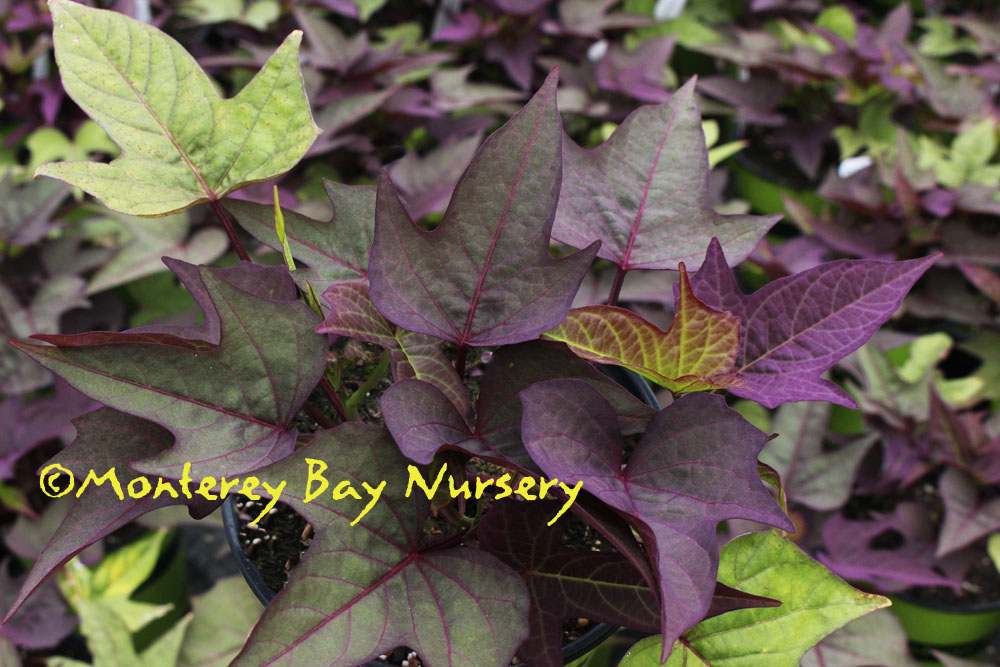
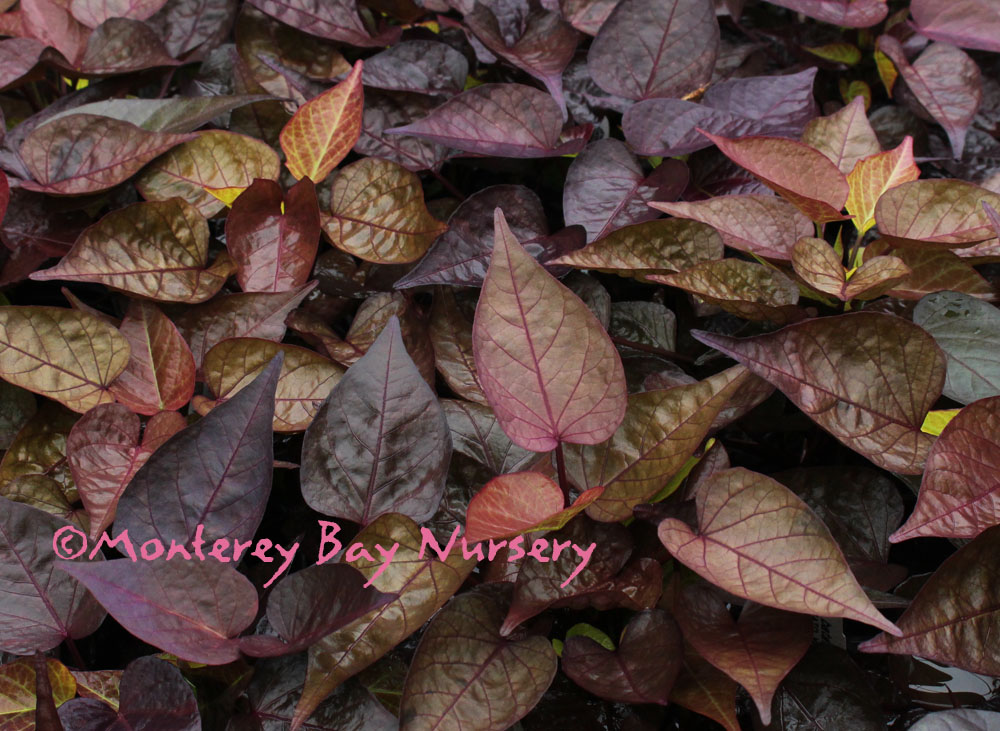
'Bright Idea Rusty Red' (not currently in production) green, with purple and bronze veins and highlights as it matures, lobed leaf. rev 7/2017
'Bronze Sweet Georgia' bronzy green, heart-shaped leaves. ref 4/2020
'Cameo' (not currently in production) black-green, heart-shaped. rev 7/2017
'Chartreuse' generic, for any of the chartreuse varieties with a heart-shaped leaf. rev 7/2017
'Floramia Limon' (not currently in production) chartreuse green maturing to golden green, deeply divided. rev 7/2017
'Floramia Nero' (not currently in production) black-green, divided leaf. rev 7/2017
'Floramia Rosso' (not currently in production) rusty bronze over light green, aging to deep bronzy red, heart-shaped. rev 7/2017
'Floramia Verdino' (not currently in production) bright light green, bronzy veins with age, slightly divided. rev 7/2017
'Goldfinger' (not currently in production) light green aging to light golden yellow, divided leaf. rev 7/2017
'Green' generic for any of the deeper chartruese green varieties, heart-shaped leaf. rev 7/2017
'Kelly Ray' green splashed dark purple, or dark purple splashed green. Heart-shaped. rev 4/2020
'Mardi Gras' (not currently in production) bronzy green with darker veins, heart-shaped. rev 7/2017
'Margarita' (not currently in production) chartreuse, broadly heart-shaped. rev 7/2017
'Marguerite' (not currently in production) glowing chartreuse to light golden yellow, thin red edge, heart-shaped. rev 7/2017
'Purple' generic, for any of the green-black varieties, heart-shaped leaves. rev 7/2017
'Rusty Red' generic, for any of the bronzy green varieties, heart-shaped leaves. rev 7/2017
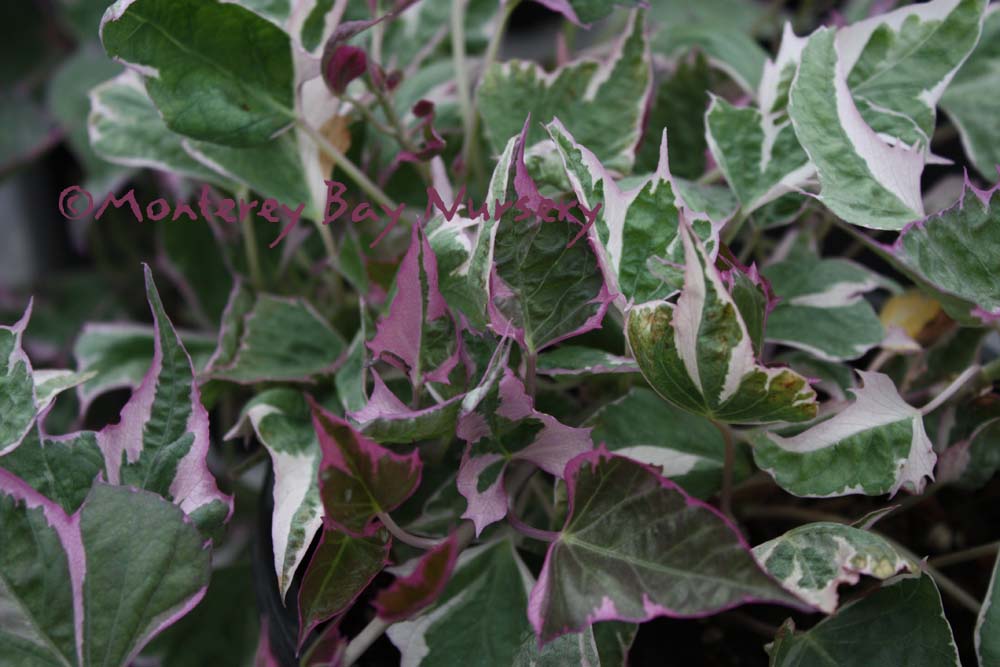
'Tricolor' generic for any of the green, white, pink variegated varieties, heart-shaped leaves. rev 7/2017
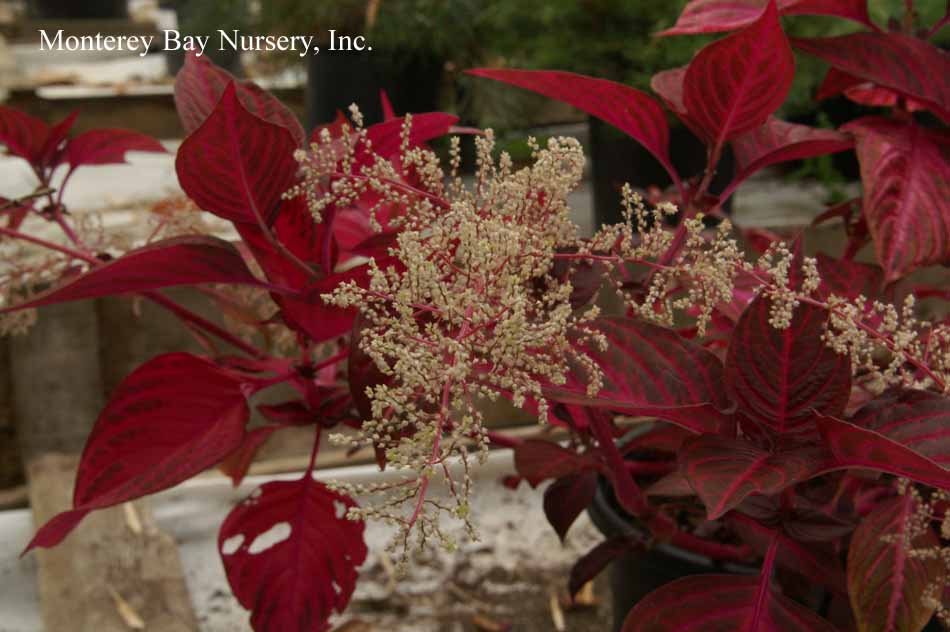
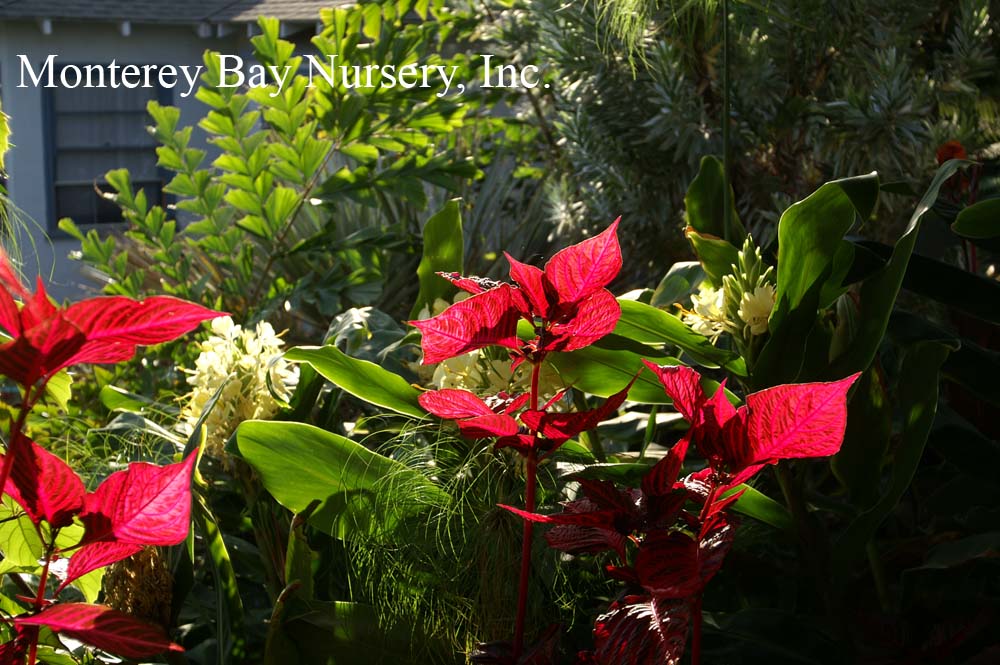
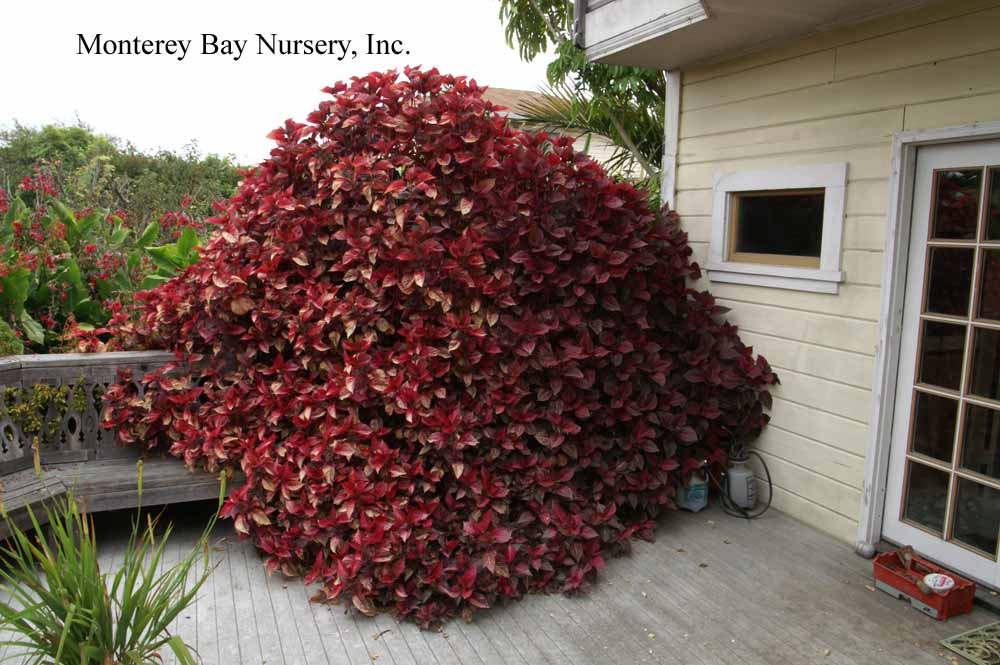
Iresene lindenii BLOODLEAF foliage closeup funny flowers backlight effect at my house a little later a fabulous, fast, tender foliage plant for use when you need intense color in part sun or shady conditions. It grows to about 3' tall (and then some in very favorable conditions) and features dark coral red to fluorescent pink, lance-shaped leaves, with pointed tips, to about four inches long, striped with dark bronze. As leaves age the color becomes a lighter, almost fluorescent magenta pink. Its foliage colors are reminiscent of fall color tones found in other members of its family, the Amaranthaceae. This is probably some named red-leaved variant whose moniker I can't seem to find, because it occasionally reverts to a simpler green leaf with creamy veinal stripes, which is attractive in its own right and may be offered by us in the future. It grows very quickly with enough food and water and quickly fills in any spot to provide a blast of color. It can't take almost any frost, but if you can give it any protection whatsoever it should either be entirely evergreen or at least perennial most years in Sunset zones 8 and 16-24. In the very coldest years it will be killed but is so fast and easy you can even use it as a giant foliage annual in colder areas. It makes a great Coleus substitute for us here on the West Coast where that plant is limited by lack of humidity, lack of heat, or plenitude of snails. Snails will still go after this but I don't think they travel miles upwind like they do following the luscious leaf scent of Coleus (just my theory). It even outgrows most snail damage because it grows fast under cool conditions and outrageously fast under warm conditions. Use it in combo containers (fantastic!), against dark walls (superb!), or just tucked into any empty spot in your shade garden. USDA zone 9-10, Sunset zones 8, 16-17 (all with protection except as an annual), 21-24. Amaranthaceae. Ecuador. rev 10/2003
Iris PACIFIC COAST HYBRIDS evergreen perennial rhizomes, spreading slowly to form short clumps. Excellent for dry shade situations. Drought tolerant, showy, deer-resistant, and tough. Though often specified in landscape plans as "Iris douglasiana," almost all forms in the trade are actually hybrids between species which range from California through Washington. The primary species involved were I. douglasiana (mostly used for blue, purple, white), I. munzii (blue, purple), I. inomonata (yellow), I. macrosiphon (purple, pink, white) and I. tenax (red). Society for Pacific Coast Native Iris. USDA zone 7/Sunset 5-9, 14-24. Iridaceae. rev 3/2015
note: all above text and images ©Luen Miller and Monterey Bay Nursery, Inc. except as otherwise noted'Alta California' flower our own seedling selection, this is a rich, deep violet purple in color. This has been a durable variety and consistent grower. rev 12/2022
'Benitoite Blue' flower more flowers pronouced "benito-ite," and named after the beautiful, ultra-rare, deep blue crystals first discovered on San Benito Mountain. Benitoite is California's official state gemstone, but of course you knew that, as well as the fact that the source mine was recently exhausted so there is no more supply. This variety is a first-generation seedling from the originally wild-collected I. douglasiana selection 'Santa Lucia.' It essentially matches its parent for size, vigor, dependability and flower form but is slightly bluer in color. We also sell seedling crops derived from this variety. rev 12/2022
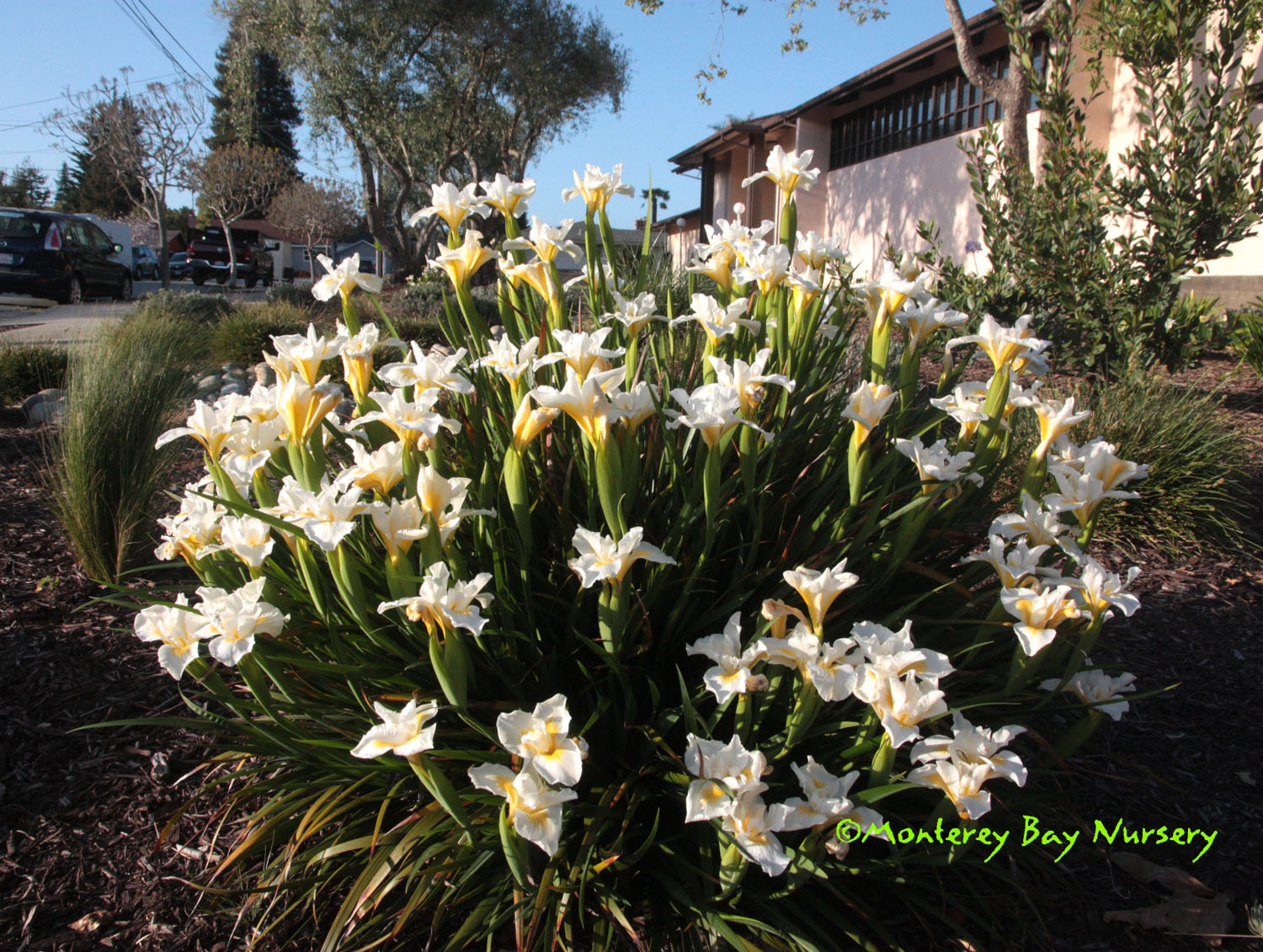
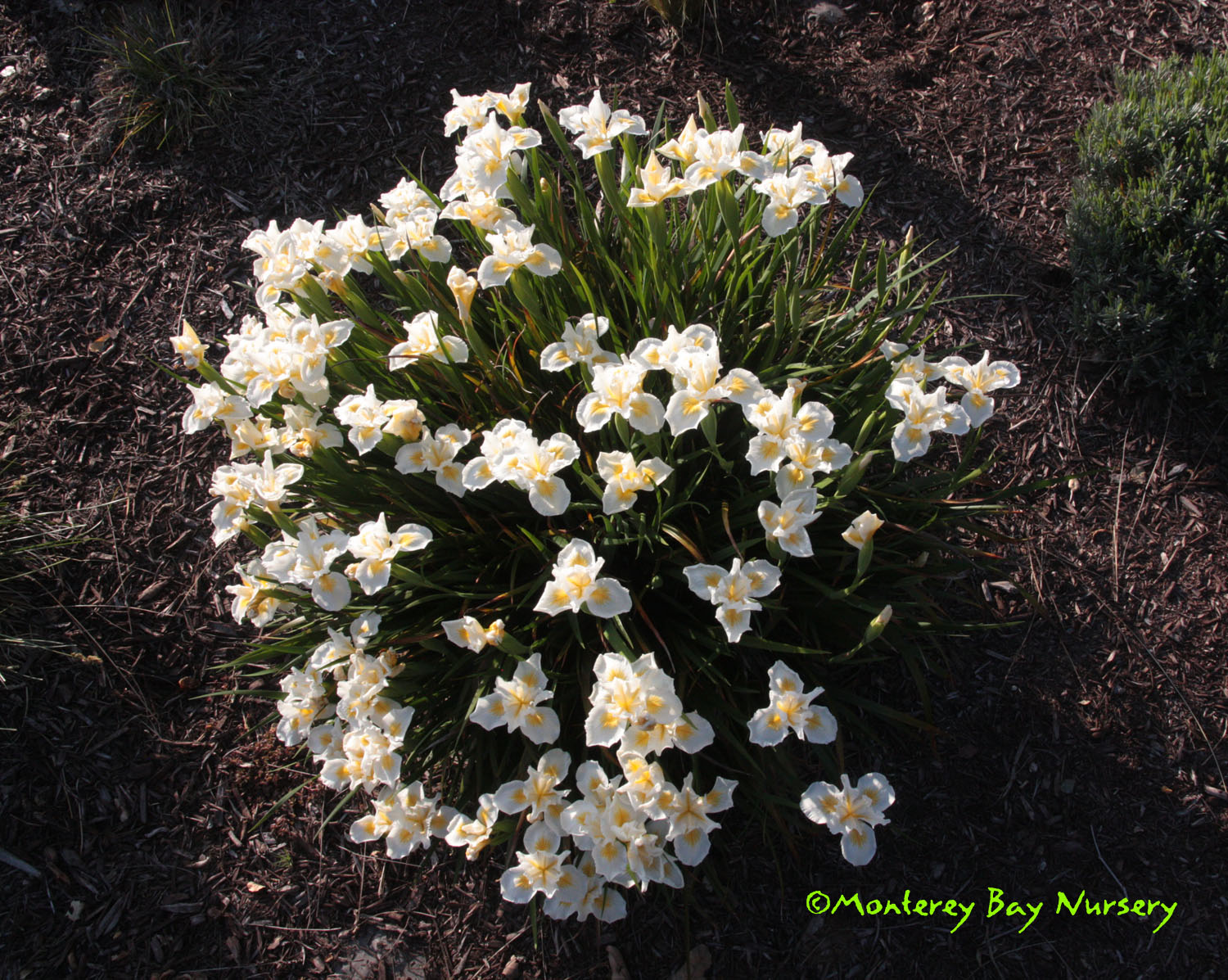
'Canyon Snow' why you grow it striking flowers excellent landscape example, downtown Soquel almost certainly a straight I. douglasiana selection, this is a very forgiving, tough, dependable, vigorous, form with almost pure white flowers, a heavy, reliable display, and almost disease free, shiny, dark green foliage. It can be used with confidence in commercial applications. Still one of the very best native selections or hybrids ever, maybe even #1. rev 4/2021
'Dark Purple' flowers, leaves a primary I. douglasiana x munzii hybrid, selected from a large block of seedlings that were aimed at providing a darker, more vigorous dark purple. rev 3/2015 MBN INTRODUCTION-2006
'Dorothea's Ruby' (not currently in production) sultry flower dark purple and red violet flowers on spiky green leaves clumping in sun or dappled shade. Little watering in summer with well drained soil. USDA 7. rev 3/2015-Suzy Brooks
'Gold Special' why it's special even more special with morning dew! bloom power can't get enough a Dr. Charles Jenkins hybrid with rich, deep golden yellow flowers that really sparkle in the morning dew. Low habit, dense flower display, unusually strong and unusual color. Charming! rev 4/2020 MBN INTRODUCTION-1995
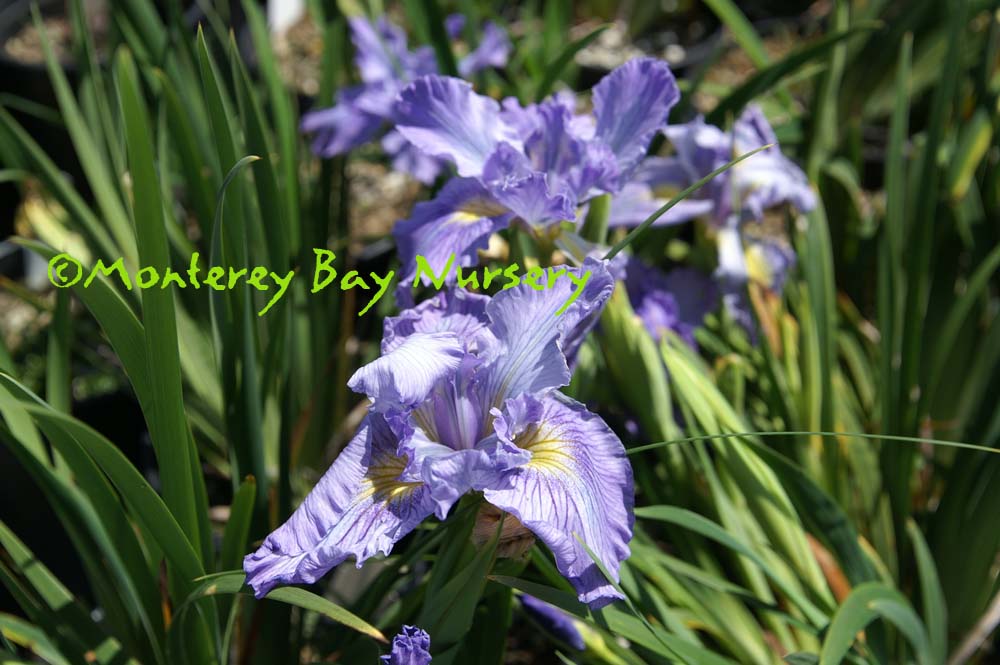
'Idylwild' sumptuous flower! tall, robust stalks of blue flowers with strong white lines. Joe Ghio. rev 3/2015
'Light Blue' flower a primary I. douglasiana x munzii hybrid, selected from a large block of seedlings that were aimed at providing a better "true blue." rev 3/2015 MBN INTRODUCTION-2006
munzii 'Dark Purple' beauties a deep, intense purple color, on a seedling selection from I. munzii. Dark green foliage, good landscape growth and vigor. Forms clumps, getting bigger and better each year. rev 4/2015-Suzy Brooks
'Popcorn Canyon' flower a seedling of 'Canyon Snow,' with slightly broader and more ruffled petals and very similar growth habit, foliage, vigor and durability. rev 12/2022
'Randy's Dark Purple' typical flower display a wild selection by the late and very great Randy Morgan. Puts on a heavy show of dark dark purple flowers, great vigor, medium size habit with very glossy dark green leaves. Good production qualities and quite garden-culture tolerant but still very tough and reliable. rev 4/2020
'Santa Lucia' tough, forgiving purple species selection my thriving clump flower color in sun along with 'Randy's Dark Purple,' probably our best true, pure, wild I. douglasiana selection, from a CNPS Santa Cruz Chapter plant sale, selected by Brett Hall of the UCSC Arboretum from a population in the Santa Lucia Mountains south of Monterey. This is strong, robust, very production-tolerant, garden-tolerant, disease resistant variety and is a vigorous, reliable bloomer. It is also still very wild in its degree of drought tolerance but not in its durability or adaptability. Narrow, dark blue (shade) to deep blue purple flowers (sun) are highlighted with white lines on the lip, and held nicely above the foliage on stalks that can bear up to 8 flowers per stalk starting in early spring. Flower stalks on my front yard plant reach above my knee. My plant has thrived under the shade of a dense canopy of live oak branches and no irrigation since its first year, presenting a tall, graceful clump of high-gloss, deep green foliage. Due to the above features and its observed performance. I believe this might be close to 'Canyon Snow' for commercial landscape and garden show, reliability and performance, but time will tell. If it is, that's the best any native or native hybrid iris can do. If you have the chance combine it with our native California Poppy, the color combination is really nice. Full sun in the coastal fog belt, part to full light shade elsewhere. Average soils, average drainage, frost hardy of course. USDA 7/Sunset 5-9, 14-24. rev 4/2021
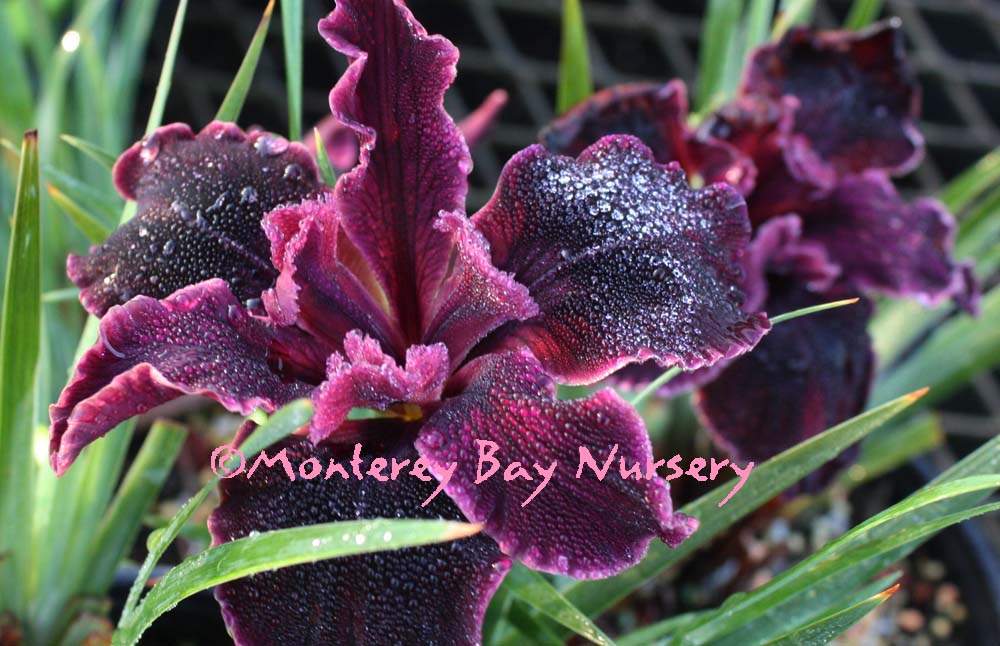
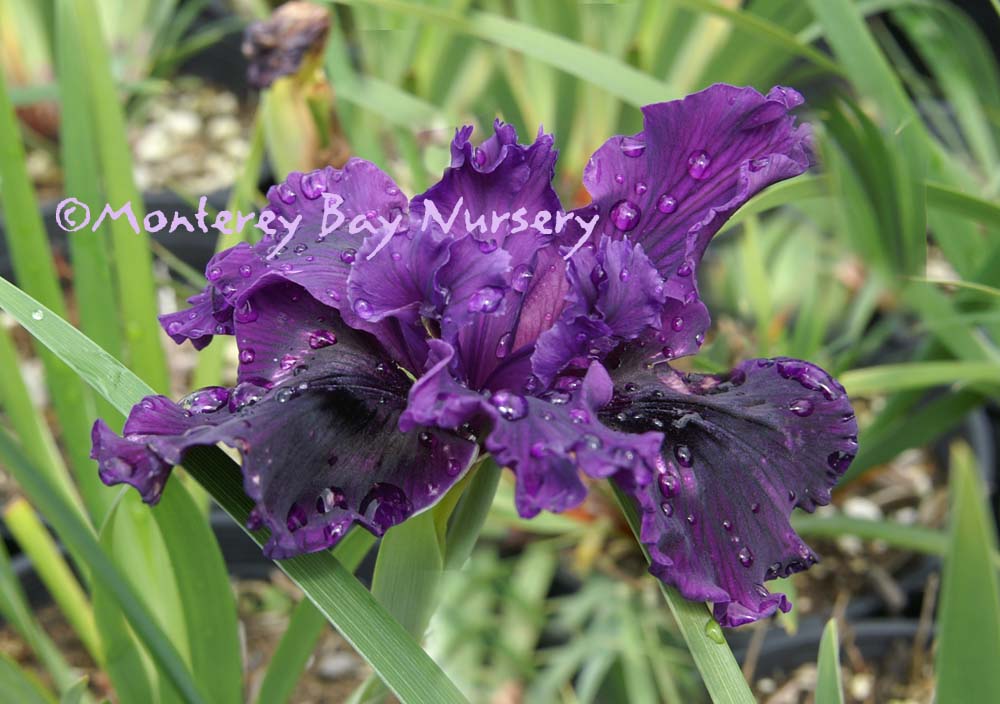
‘San Andreas’ intense flower deep, dark, almost black purple, and velvety texture too. A Joe Ghio introduction. rev 3/2015'Tiburcio Vasquez' dramatic flower sultry, rich, dark violet purple on very broad petals with lighter uprights for contrast. Named for the quasi-Robing Hood figure from the Californio Gold Rush era. MBN selection and introduction. rev 12/2022
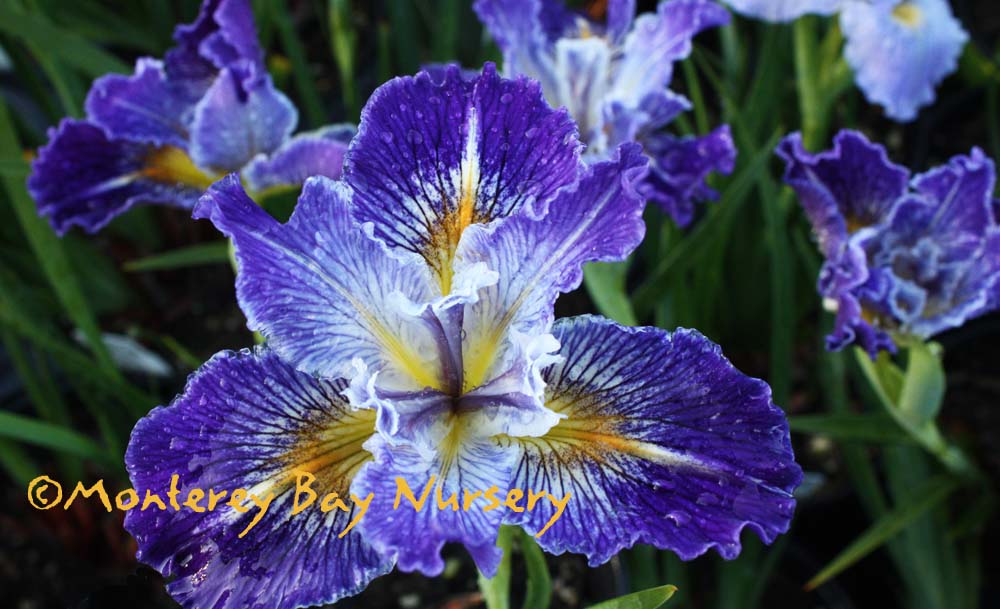
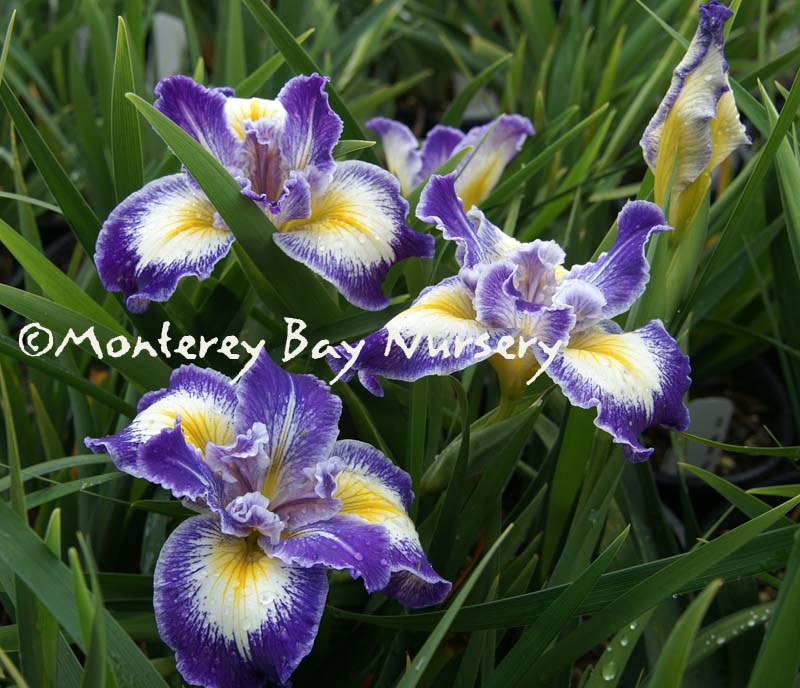
'Wilder than Ever' crazy colors deep purple blue petals outline starkly ivory white centers and yellow throats. A wonderful combination, plus vigorous, disease resistant, dependable. Joe Ghio introduction. rev 3/2015